Blog

Trust Is Built in Small Moments I once watched a manager handle a sensitive

I once watched a manager handle a sensitive performance issue with quiet care. She closed the door, listened without interrupting, and promised to follow up on two specific concerns. She did exactly that by the end of the week. Nothing dramatic happened, but the team noticed. Trust grew because she kept a small promise.

Most leaders think trust is built in big moments, a crisis, a major announcement, a bold speech. In reality, trust is built in the routine hours. People watch whether you keep...

Why Crisis Leadership Is Decided Before the Crisis I once watched a leader

I once watched a leader navigate a company-wide crisis with remarkable poise. Teams rallied. Clients stayed calm. The situation resolved in weeks, not months. A colleague asked me afterward, “How did she do that?” My honest answer: she did not do it in the crisis. She did it in the five years before the crisis ever happened.

When crisis hits, most leaders ask, “How should I handle this?” But that question arrives too late. By the time you need trust, it is too late to build it. The leader I...

Why Micromanagement Backfires: The Psychology of Trust I once worked for a

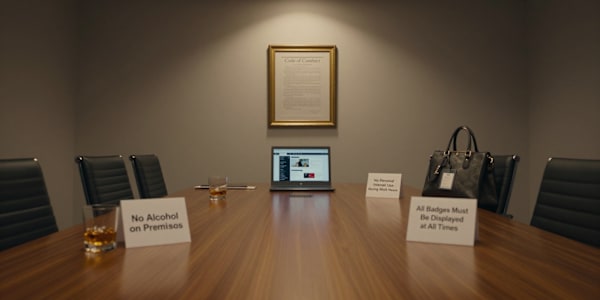
I once worked for a boss who installed keystroke loggers on every computer in the office.

He monitored our emails. Tracked our browsing. Even hacked into personal accounts.

His reasoning? He needed to “stay ahead of problems.” He could not afford to trust people who might betray the company.

Here is what actually happened: every talented person left within eighteen months. The only people who stayed were those who could not find other options. Innovation died. The company limped along on...

The Temptation to Explain Yourself One of the strongest urges leaders feel

One of the strongest urges leaders feel under pressure is the need to explain themselves. When decisions are questioned, motives misunderstood, or outcomes criticized, the instinct to clarify, justify, and defend rises quickly. Explaining feels responsible. It feels transparent. In reality, it often comes from insecurity rather than wisdom.

Not every decision needs a narrative. Not every criticism deserves a response. Leaders who over-explain slowly give away authority without realizing it....

When Leadership Costs You Relationships One of the least discussed costs of

One of the least discussed costs of leadership is relational strain. Not the obvious kind that comes from conflict or failure, but the quieter kind that emerges when responsibility reshapes how people interact with you. Leadership decisions do not just affect outcomes. They affect proximity, trust, and expectations, often in ways no one names out loud.

As authority grows, relationships subtly change. Conversations become more measured. People share less freely. Some friendships cool without...

The Danger of Needing to Be Liked as a Leader One of the most subtle traps

One of the most subtle traps leaders fall into is the need to be liked. It rarely starts as insecurity. It often begins as empathy, approachability, and a genuine desire to care about people. Over time, that desire can quietly shift from serving others to needing their approval, and when that happens, leadership begins to drift.

Being liked feels validating. It reassures you that you are doing a good job, that people trust you, and that you belong in the role you carry. The problem is that...

The Weight of Being the Final Decision There is a moment in leadership that

There is a moment in leadership that feels heavier than most people expect. It is the moment you realize the discussion is over and the decision is yours. Everyone has shared their thoughts. The data has been reviewed. The options are clear. Then the room gets quiet, and all eyes turn toward you. No one says it out loud, but the truth is obvious. Whatever happens next belongs to you.

That weight changes how decisions feel. Advice is helpful, but it does not carry consequence. Opinions are...

The Most Dangerous Moment in Leadership Is Not the Crisis Most leadership

Most leadership damage does not happen during obvious moral failure or public collapse. It happens quietly, long before anyone notices. It happens when a leader reacts instead of governs, speaks instead of listens, or moves instead of pauses. By the time the crisis arrives, the real decision has already been made.

Pressure does not introduce new problems. It exposes existing ones. When tension rises, leaders fall back on defaults. Those defaults are not created in the moment. They are formed...

Leadership Is Built Before the Crisis Arrives Most leaders believe they

Most leaders believe they will rise to the occasion when pressure hits. We imagine that when the moment comes, when the deal is on the line, when the conflict surfaces, when the temptation appears, we will suddenly become courageous, clear-headed, and wise. Experience teaches a harsher truth. Under pressure, we do not rise. We revert. We fall back to whatever has already been built inside us.

Leadership failures rarely come from ignorance. They come from ungoverned reactions. When the moment...

The Leadership Discipline of Owning the Mess Most leaders want the wins.

Most leaders want the wins. They want the promotion, the momentum, the recognition, the clean metrics that make everything look smooth. The problem is that real leadership is usually built in the mess. Things break. People misunderstand. Projects drift. Emotions flare. If you lead long enough, you will inherit problems you did not create. You will also create a few problems yourself.

One of the simplest ways trust is built is when a leader owns the mess without flinching. Not the dramatic kind...

 One of the most common questions Christian leaders ask is also one of the

One of the most common questions Christian leaders ask is also one of the most misleading.

“Do you have peace about it?”

It sounds wise. It feels spiritual. It is often neither.

Peace has become the currency we use to avoid responsibility. We treat it like a green light from God, assuming that alignment will always feel calm, settled, and reassuring. When peace is absent, we hesitate. We wait. We assume something is wrong.

That assumption quietly paralyzes a lot of faithful leaders.

Christian...

Leading in the Silence Most leaders don’t break when things are hard.They

Most leaders don’t break when things are hard.

They break when things are quiet.

Pressure feels honest. Crisis feels clarifying. When the room is loud and the stakes are obvious, leadership narrows. You act. You decide. You move. Even fear has a kind of focus when the threat is visible.

Silence is different.

Silence is when the emails stop coming. When prayer feels faithful but uneventful. When Scripture still matters, but no verse jumps off the page with instructions attached. Silence is when...

The Leadership Habit That Builds Trust Faster Than Talent Most leaders

Most leaders assume trust is earned through performance. Hit the numbers. Ship the project. Win the client. Keep the machine moving. Results matter, but they are not the primary trust-builder. Teams rarely give their deepest trust to the most talented person in the room. They give it to the most consistent one.

Consistency is not exciting. It is also the difference between a leader people tolerate and a leader people follow. A consistent leader shows up the same way when things are going well...

Steady Under Pressure Leadership has a way of exposing what we actually

Leadership has a way of exposing what we actually believe. Most people can talk about values when the stakes are low. The test shows up when pressure climbs, timelines tighten, money is on the line, and people are watching. In those moments, leaders tend to default to whatever is deepest in them. If fear is deepest, the leader becomes reactive. If ego is deepest, the leader becomes defensive. If Christ is deepest, the leader becomes steady.

A lot of leaders confuse control with strength....

Christmas Day Leadership Christmas Day is loud in the best ways. Kids wake

Christmas Day is loud in the best ways. Kids wake up early. Coffee starts brewing. Wrapping paper piles up. Phones light up with messages. Houses fill with food and people and noise. It is a day many of us look forward to all year.

It is also a day that can pass too fast if we don’t slow down long enough to remember why it exists.

Christmas is not mainly about gifts. It is about the Gift. God gave His Son. Christ came into the world on purpose, for a purpose. He came to save what was lost, to...

Christmas Eve Leadership Christmas Eve has a way of cutting through the

Christmas Eve has a way of cutting through the noise. The pace slows down for a moment. The lights come on. The house gets quieter. People start thinking about what matters again. That is a gift in itself, because most of us spend the year running hard and rarely stopping long enough to ask whether we are becoming the kind of leaders God can trust.

The reason for the holiday is not nostalgia. It is not tradition. It is not even family, as good as that can be. Christmas is about Christ. God...

Lead Like You Are Accountable to God, Not the Room Most leaders get trapped

Most leaders get trapped by a simple pressure. They lead for the room. They lead for approval, for applause, for avoiding conflict, for being liked, for keeping the peace. That pressure is subtle, but it is strong enough to shape decisions, tone, and even character over time.

Christian leadership in the professional world has to be different. It has to start with a conviction that God is the audience. That does not make you harsh or self-righteous. It makes you steady. It keeps you from...

Presence is a Leadership Decision Leadership gets tested when it costs you

Leadership gets tested when it costs you something. Anybody can lead when the calendar is calm, the numbers look good, and the team is humming. The real question is what you do when the database goes down at 9 PM, a client meeting turns tense, or a production issue needs someone to get in the trenches. In Christian Leadership in the Professional World, I talk about a simple conviction that shaped my leadership over time: leadership is presence. Presence is not a building or a badge. Presence...

Why Good Leaders Feel Lonely Leadership has a strange side effect that no

Leadership has a strange side effect that no one really warns you about. The better you get at it, the lonelier it can feel. Not because you are unlikable or distant, but because responsibility quietly changes how people relate to you. Decisions land on your desk that cannot be shared, frustrations pile up that cannot be voiced publicly, and clarity begins to separate you from the crowd you are leading.

Early on, leadership feels communal. You brainstorm openly, vent freely, and process...

The Discipline of Not Responding One of the hardest disciplines for a

One of the hardest disciplines for a leader to learn is restraint. Not the kind that looks passive or fearful, but the kind that is deliberate, controlled, and rooted in confidence. There are moments when responding quickly feels powerful, necessary, and even righteous. In reality, speed is often the enemy of wisdom.

Most leadership damage does not come from what we fail to say. It comes from what we say too soon.

Pressure creates urgency, and urgency tempts leaders to react instead of govern....