Most leadership failures do not begin with a scandal. They begin with a Tuesday afternoon.
The calendar is unremarkable. The pressure is not. Your inbox has a problem that will not fix itself. A teammate is slipping, and you can feel the temptation to ignore it for one more week. A decision needs clarity, and you do not have it. Nobody is watching closely enough to reward the right choice or punish the wrong one. This is where leaders get quietly engineered.
Many of us have been trained to think about character in crisis terms. We imagine the headline moment, the high stakes meeting, the make or break decision. Those moments matter, but they are not the workshop. Crisis reveals what you have built. Tuesday is where you pour concrete.
Here is the governing idea: your leadership is formed by what you do when it would be easy to do nothing.
A leader under load needs more than good intentions. You need structure. You need habits that bear weight when your emotions spike, your energy dips, and your time gets squeezed. Structure does not show up on your resume. Your team feels it every day.
The Bible talks about this kind of leadership formation in ordinary language. Jesus says, “If you are faithful in little things, you will be faithful in large ones. But if you are dishonest in little things, you won’t be honest with greater responsibilities” (Luke 16:10, NLT). He is not talking about hero moments. He is talking about repeatable patterns. Faithfulness is practiced. Dishonesty is also practiced.
Paul takes the same theme into work itself: “Work willingly at whatever you do, as though you were working for the Lord rather than for people” (Colossians 3:23, NLT). This is not a call to grind yourself into dust. It is a call to govern your motivation when nobody claps. Leaders with integrity learn to work from alignment, not applause.
The trap on Tuesday afternoon is subtle. You tell yourself the delay is wisdom. You call avoidance “being patient.” You call cowardice “keeping the peace.” You call a half truth “being strategic.” Each small compromise feels like it buys you relief. Each one also lays a crooked brick in the foundation your team has to stand on.
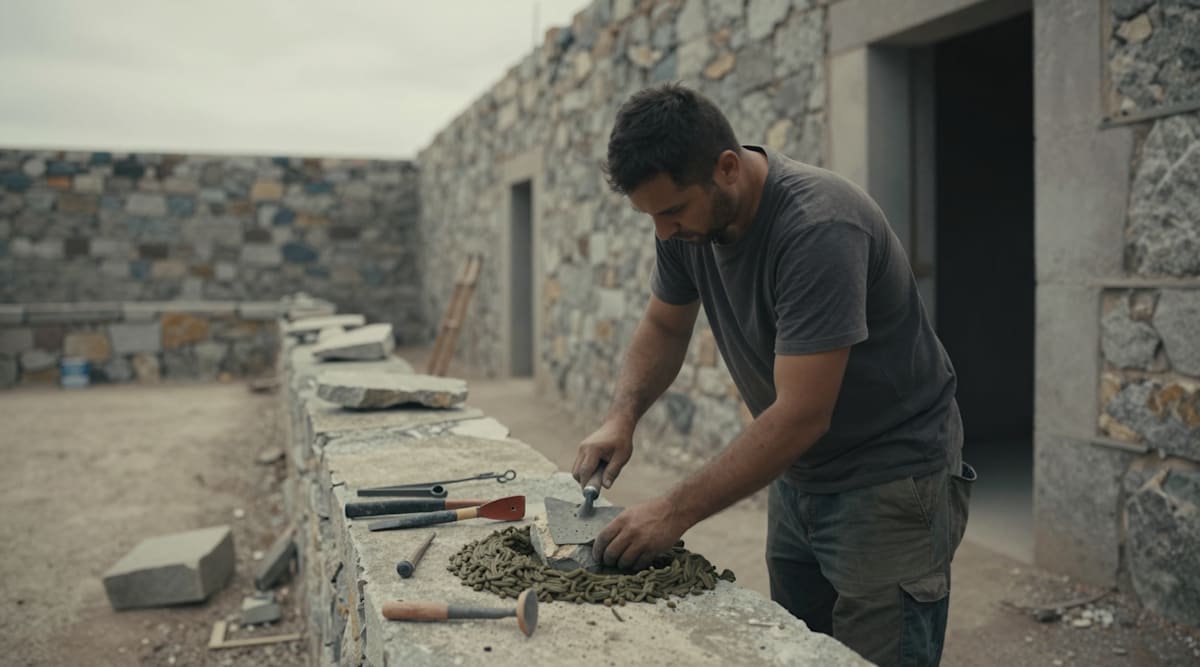
The construction site for a leader is not the stage. It is the back room. It is the first draft you do not send. It is the calendar invite you finally create for the hard conversation. It is the quiet decision to correct the record. It is the moment you choose to go to God first instead of venting down the org chart.
A practical way to think about Tuesday is this: Tuesday afternoon is the test of governance without adrenaline. The big crisis has energy. People show up. The sense of urgency can pull you into focus. Tuesday has none of that. Tuesday tempts you to operate on impulse, habit, and comfort. You will not rise to the occasion later if you keep choosing comfort now.
Scripture gives leaders a clean picture of what “later” looks like. Jesus closes the Sermon on the Mount with a construction metaphor: “Anyone who listens to my teaching and follows it is wise, like a person who builds a house on solid rock. Though the rain comes in torrents and the floodwaters rise and the winds beat against that house, it won’t collapse because it is built on bedrock” (Matthew 7:24-25, NLT). The house does not become strong in the storm. The storm proves whether you built well before the storm.
The context matters. Jesus has just spent chapters describing a life ordered under God: truthfulness, integrity, prayer that is not performance, restraint under insult, reconciliation before worship. Those are not crisis behaviors. They are daily practices. He ends by saying that obedience is the difference between a house that holds and a house that falls.
A leader who wants to carry weight needs a Tuesday afternoon playbook. Not a motivational quote. Not a new app. A set of small, non negotiable moves that keep you honest, clear, and relationally safe when you are tired.
Here is a framework I recommend. Call it the Tuesday Afternoon Build.
First, name the load. Anxiety grows in vagueness. Clarity is governance. Write one sentence that describes what is pressing on you. Not ten problems. One. “I am avoiding a conversation with Mark because I do not want to disappoint him.” “I am tempted to exaggerate our progress because I am afraid of looking weak.” “I am carrying resentment because the team is not matching my pace.” Put it in words. You cannot govern what you refuse to name.
Second, do the truth step. Tuesday is where leaders lose authority by small distortions. Authority comes from reality. Ask, “What is the most truthful next communication I can make?” This might be, “We are behind schedule and I own it.” It might be, “I do not know yet, but I will know by Friday.” It might be, “That was my mistake, and I corrected it.” This is not confession theater. This is leadership. Teams relax when leaders stop managing impressions.
Third, repair the smallest breach. Integrity does not collapse all at once. It erodes. One unreturned message. One quiet misrepresentation. One avoided apology. One delayed decision that leaves everyone in limbo. Pick the smallest repair that restores alignment with reality. A leader who repairs quickly builds trust quickly.
Fourth, move the hard conversation to the calendar. Leadership pain compounds when it stays unspoken. Avoidance always invoices you later. Set a time. Name the purpose. Keep it simple. “I want to talk about expectations and how we get back to standard.” You do not need the perfect script. You need the appointment.
Fifth, practice upward pressure release. Many leaders vent downward because it is available. That is how you turn your unfinished work into your team’s anxiety. Take the pressure to God first. The Psalms model this. David brings fear, confusion, and frustration upward instead of weaponizing it sideways. “Turn your ear to listen to me; rescue me quickly. Be my rock of protection, a fortress where I will be safe” (Psalm 31:2, NLT). He does not sanitize his emotions. He directs them.
Sixth, choose one act of quiet obedience. This is the brick. The boring thing. The thing nobody will praise. It might be closing the loop with a customer. It might be documenting a decision. It might be praying for the person who irritates you. It might be shutting your laptop and going home on time so you do not lead tomorrow from exhaustion.
This checklist is small on purpose. Tuesday does not need your entire life reorganized. Tuesday needs one governed move that trains your reflex.
A leader who practices this begins to notice a shift. The team feels less whiplash. Communication gets cleaner. Drama loses oxygen. Decision making slows down just enough to get wise. Over time, you become the kind of leader who can handle Thursday’s bad news without lying, leaking, or lashing out.
The deepest point is spiritual. God forms builders, not performers. Faithfulness is rarely glamorous. Many people want the moment where everyone finally sees their strength. God often prefers the hidden moment where you choose obedience over ego.
You might be in a season where God feels quiet. That silence is not always punishment. Sometimes it is permission. God may be letting you build without constant instruction so you learn His ways, not just His directions. Tuesday afternoon is where that maturity is proven.
A sharp charge to close: stop waiting for a crisis to become serious. Build today while it is ordinary. Tell the truth while it is cheap. Repair while it is small. Pray while the pressure is manageable. Put the hard conversation on the calendar before the breach becomes a crater.
Question: What is the one small, truthful repair you have been delaying that would lower the anxiety in your leadership this week?