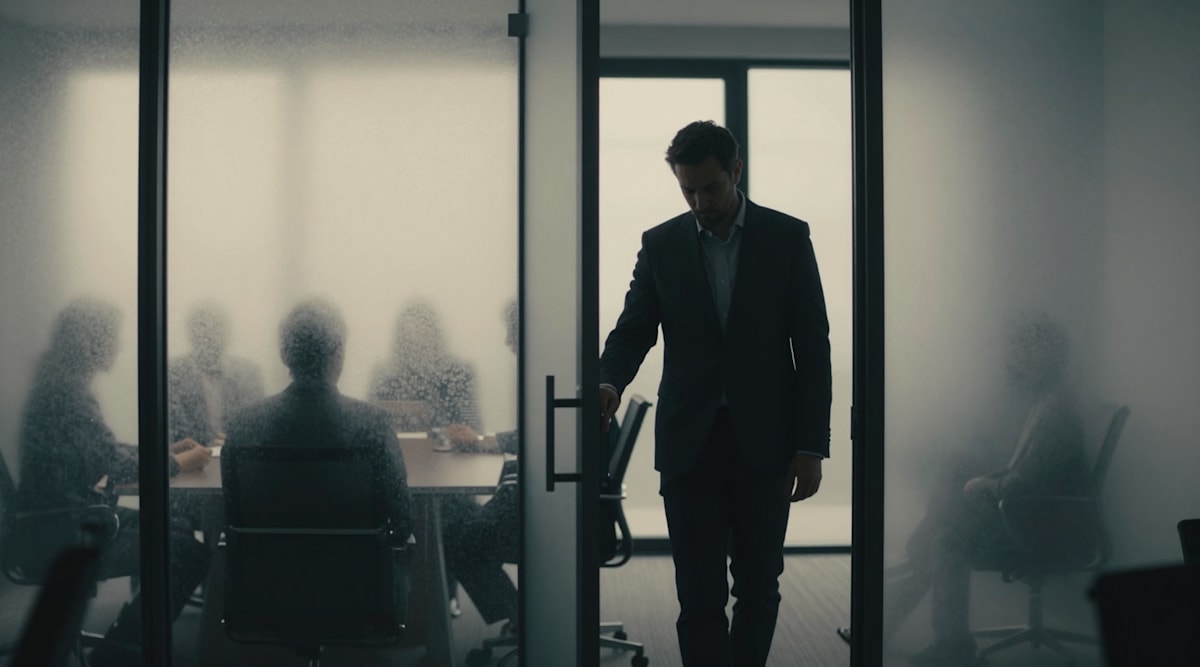
A project cancellation lands in your inbox at 3:17 on a Tuesday afternoon. Six months of late nights. A team that gave everything. One sentence from Corporate: “Strategic pivot. Stop all work immediately.” By the time you walk in the next morning, every set of eyes in that room is watching the door. Not waiting for an update. Waiting to find out if the room is safe.
That question, is this room safe right now?, is never spoken. It is broadcast the moment you cross the threshold. Your face answers it before you say a word. The posture of your shoulders answers it. The speed at which you move to the whiteboard answers it. Your team has been reading those signals longer than you realize, and they have already learned what your bad Tuesday looks like. They know whether to tell you the truth today.
This week we have been dismantling the Myth of the Robot Leader one brick at a time. We established that emotions function as data, not directives. We recovered lament as a pressure valve aimed upward at God rather than outward at the team. Yesterday we watched Jesus weep at Lazarus’s tomb and still call the miracle forward, which settled the argument that grief and resolve cannot occupy the same moment. Today we land at the practical question all of that has been pointing toward: what does it actually look like to lead the team after you have done the interior work?
The phrase that has stayed with me through this material is this: governed leaders become safe containers. That sentence carries more structural weight than it first appears. A container is not a drain. It does not absorb everything and then collapse. It holds what is poured in without either spilling or sealing the lid. That is the precise capacity your team needs from you in high-pressure moments, to hold their reality without weaponizing it, drowning in it, or pretending it is not there.
Think about what the alternative looks like. The leader who skips the interior work walks into Tuesday morning still carrying yesterday’s hit. The unresolved grief leaks. It comes out as sarcasm. It comes out as a curt answer to a legitimate question. It comes out as the kind of flat affect that tells every person in the room their emotions are inconvenient. The team gets that message fast. They stop bringing real information. They start managing the leader’s mood instead of doing the actual work. The leader who cannot hold the team’s chaos has not avoided emotion. The leader has converted emotion into organizational dysfunction.
Governed Leadership is the third way. It is not suppression, grit your teeth and say you are fine, and it is not leakage, vent downward until the culture is poisoned. It is a specific sequence: process the hit with God first, then walk in the room. The Watchman’s Protocol gives you the architecture. ARREST the impulse to react while the wound is still open. AUDIT what is actually happening in your interior: the fear, the embarrassment, the fatigue, whatever showed up. ALIGN with what is true regardless of how the Tuesday felt. Then ACT from that cleared space when it is time to open the door. The miracle of that sequence is not that you arrive feeling nothing. It is that you feel everything in the right order and carry it to the right address before you lead the people.
Here is what that sequence looks like when it is working. The project director who gets the cancellation email drives home differently than the one who does not. No podcast. No call. He sits with the weight. He names the grief to God without cleaning it up first. He says things in that car he would never say in a board meeting. He is not performing spiritual hygiene; he is offloading real pressure at the only address that can actually carry it. When that process is complete, even if grief is still present, even if the wound is still tender, he can carry the truth into the room without setting the team on fire. He can say: “Guys, this is hard. I am disappointed too. We poured a lot into this and it hurts to see it go. Take a moment to grieve it. Here is what I also know is true: we built a great team and we are going to apply that to what comes next.”
That speech is only possible after the processing. Walk in having skipped the interior work and those same words sound rehearsed. The team can tell. They have watched you through every restructure and every quarterly miss. They know the difference between a leader who is with them and a leader performing calm.
Psalm 62:8 (NLT) says, “Pour out your heart to him, for God is our refuge.” The word “refuge” in that passage carries the weight of a high, protected place, a stronghold. God can hold what you pour out. He is not fragile. He will not collapse under the full weight of your honest lament. You can bring the complete measure of the Tuesday afternoon hit, and He will hold it. The reason that matters for leaders is direct: you can only give the team what you have first received. If you have practiced pouring your chaos upward toward God, you have practiced being held. That practiced experience becomes the capacity to hold others.
Notice the order of operations in John 11. Jesus moved toward the sisters before He rerouted their hope. John records that He was “deeply troubled” (John 11:33, NLT) before He acted. He did not arrive with a plan. He arrived present, then decisive. The sequence matters because trust is not built during the miracle; it is built in the moment before it. When a leader enters a grieving team with genuine presence rather than efficient management, something shifts in the room. People stop bracing against the leader. They start following.
This is where the Emotional Walls connect to the broader structure we have been building all month. The walls do not exist to keep the team out. They exist to keep you structurally sound so the team can lean on you when they need to. A wall with micro cracks will not hold load. A wall built through the daily discipline of lament, through honest naming, through the habit of bringing your interior life to God before you bring your exterior life to your team, that wall can carry real weight. The safe container leader does not avoid the hard moments. The safe container leader simply stays standing when others do not.
Here is a practical audit for this weekend. Think of the last time your team brought you difficult news. What happened in your face? In your posture? Did the room feel safer or more guarded after you responded? Did people volunteer more information or less? Those signals are your feedback loop. When the room gets quieter as things go sideways, the issue is rarely the team.
One more observation worth naming before we close the week. The team that trusts the container offers its best thinking. Information flows upward honestly. Problems surface before they become crises. The organization actually knows what it is dealing with. A safe container is not a soft leadership style. It is the structural prerequisite for organizational intelligence.
Starting tomorrow, we move into Week 4: the Relational Gates. The third component of the Fortress. This week has been about governing the interior. Next week addresses what happens the moment you open your mouth. Your words carry more weight than you think. They gain mass as you rise, and the distance between a throwaway comment and a crushing directive is shorter than most leaders realize. That is where we go Monday.
I write about leadership at the intersection of timeless principles and modern workplaces. Follow for weekly insights on building teams that actually work. For more articles like this consider subscribing to my Substack at: https://christianleadership.now