The Roman aqueducts ran for hundreds of miles, and most of the structure was invisible. The arches that tourists photograph are the part that happened to cross a valley. The real work was the graded channel carrying water across the countryside, one inch of drop for every hundred feet of distance, a gradient so precise that engineers still study it. The arches were not the aqueduct. They were what held the channel up when the ground fell away underneath it. The arches served the water, not the other way around.
Paul has just spent sixteen verses describing the kind of person who qualifies to lead in God’s household. The overseer must be above reproach, faithful to his wife, self-controlled, hospitable, able to teach, gentle, not a lover of money, managing his own household well. The deacon must be examined first, tested, then allowed to serve. The requirements are specific, observable, and high. Before he moves on to the great mystery of the faith, Paul pauses to explain why any of this matters. It is not because character qualifications make for a well-run organization, though they do. It is because the church itself is something larger than the people running it.
“I am writing these things to you now, even though I hope to be with you soon, so that if I am delayed, you will know how people must conduct themselves in the household of God. This is the church of the living God, which is the pillar and foundation of the truth” (1 Timothy 3:14-15, NLT).
Paul is in transit. He hopes to reach Ephesus, but he does not know when. Roman roads, Roman weather, Roman prisons; any of them could delay him. The letter exists because the apostle cannot be there in person. Timothy is the one on the ground, and the instructions must be clear enough to guide him whether Paul arrives next week or never. What Paul writes next is one of the most concentrated statements in the New Testament about what the church actually is.
Three phrases carry the weight. First: the household of God. Oikos, the family house, not the temple complex. Paul chooses the domestic metaphor deliberately. The church is not an institution with God as its CEO. It is a family with God as its Father, and the way people treat each other inside it reflects on the Father’s name. This is why the character of leaders matters so much. In a household, the character of the parents shapes the children. In a business, the character of the CEO shapes the culture. In the church, the character of the leaders shapes whether the household looks like the Father it claims to represent.
Second: the church of the living God. Not the church of a tribal deity who competes with the gods of Ephesus for market share. The living God. Paul is writing from a city full of temples. Artemis of the Ephesians drew pilgrims from across the empire, and he is telling Timothy that the assembly gathering in someone’s home is the household of the only God who actually exists. The adjective is small and carries a universe. Living. Not an idol carved from stone. Not an idea debated by philosophers. The God who raised Jesus from the dead is alive, and the church belongs to him.
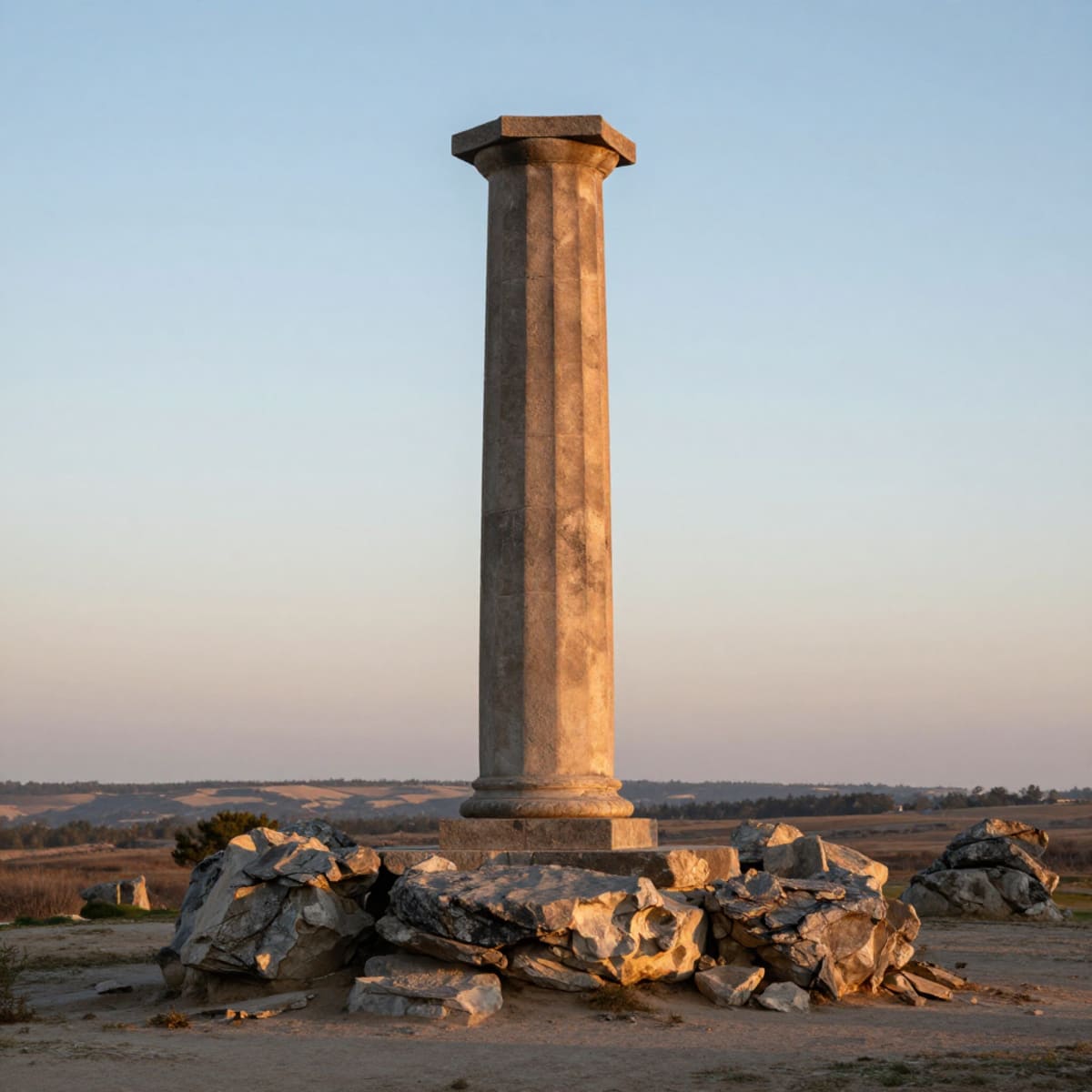
Third: the pillar and foundation of the truth. This is the phrase that should stop every leader in the room. Paul does not say the church creates the truth or owns the truth or manages the truth. He says the church is the pillar and foundation of the truth. A pillar holds something up so it is visible. A foundation holds something steady so it does not collapse. The truth is God’s. The church’s job is to hold it up and hold it steady. The arches serve the water. The church serves the truth. Paul’s entire argument about character qualifications rests on this frame. The leaders of the church must be people of proven character because they have been entrusted with the single most valuable thing in the world: the visible, steady display of God’s truth to a watching world.
Now here is where the leadership principle cuts across every context, not just ecclesiastical ones. Every leader holds something up. The question is what they are holding up and whether their hands are steady enough to hold it. A business leader holds up a set of values. A team leader holds up a standard of conduct. A parent holds up a picture of what adulthood looks like. The pillar metaphor applies wherever influence exists. The foundation metaphor applies wherever someone is building something on your example. The question Paul forces is not whether you are a pillar. It is what you are a pillar for, and whether your character can bear the weight.
This is the missing piece that connects the last two days of content to the rest of the letter. The overseer qualifications in verses 1-7 and the deacon qualifications in verses 8-13 can feel like a checklist. If you read them in isolation, they become a hiring rubric, a grid for evaluating candidates, useful but mechanical. Paul’s purpose statement in verses 14-15 reorients the entire exercise. The qualifications are not about producing an impressive leadership team. They are about ensuring that the people holding up the truth have the structural integrity to keep holding it. The character requirements are load-bearing. A pillar with a crack in it does not look any less like a pillar. It just collapses under weight the original architect designed it to carry.
Paul knew this from experience. He had watched leaders fail. He had been abandoned by Demas, who loved this present world. He had seen Hymenaeus and Alexander shipwreck their faith. He had been opposed by Alexander the metalworker. The qualifications he gave Timothy were not theoretical. They were scar tissue. Every character requirement is the inverse of a failure Paul had personally witnessed, and he was not going to let Timothy learn the same lessons the same way.
The application lands differently depending on where you lead. If you are in church leadership, Paul’s words are direct: your character is not about you. It is about whether the truth is visible and steady when people look at your life. If you lead in any other context, the principle translates without modification. Your character is either holding up something true and good, or it is holding up something else. Your team is either seeing integrity modeled consistently, or they are seeing compromise normalized. You are either a pillar of something worth holding up, or you are holding up something that will not survive the weight. There is no neutral option. Every leader holds up something.
The integrated believer will recognize where 1 Corinthians 3:11 hits with precision: “For no one can lay any foundation other than the one we already have — Jesus Christ.” The foundation is already laid. The leader does not create it, does not improve it, does not get to swap it for a more culturally acceptable alternative. The foundation is Christ, and the leader’s job is to build on it carefully and hold it up faithfully. The leader who understands this stops treating their platform as something they built and starts treating it as something they are holding steady for reasons that predate them and will outlast them.
The spiritually curious reader faces the same question in a more basic form: what are you actually holding up with your influence? Not what you say you stand for. What would the people who work for you say you actually uphold when the pressure is on? Efficiency at the expense of people? Profit at the expense of honesty? Your own reputation at the expense of someone else’s? Something that will still be true when you are no longer in the room? Paul’s pillar metaphor is not exclusively Christian. It is a truth about leadership that anyone can test against their own experience. The people you lead know what you actually hold up, because they watch where your time, your attention, and your anger go.
The connection forward is built into the letter itself. Paul follows his purpose statement with one of the most compact creedal statements in the New Testament. Verse 16 is the truth the church exists to hold up. “Without question, this is the great mystery of our faith: Christ was revealed in a human body and vindicated by the Spirit. He was seen by angels and announced to the nations. He was believed in throughout the world and taken to heaven in glory.” The pillar and foundation language in verses 14-15 is the setup, and the hymn in verse 16 is what the pillar holds. Tomorrow we turn to that hymn and the question that every leader eventually faces: when everything else is uncertain, what anchors you?
Leadership Challenge: What are you actually holding up with the influence you have? Not what your job title says. Not what your values statement claims. What would the three people closest to you, at work, at home, in your community, say you uphold when no one is watching? If the answer is uncomfortable, that gap is where character work begins.
I write about leadership at the intersection of timeless principles and modern workplaces. Follow for weekly insights on building teams that actually work. For more articles like this consider subscribing to my Substack at: https://christianleadership.now