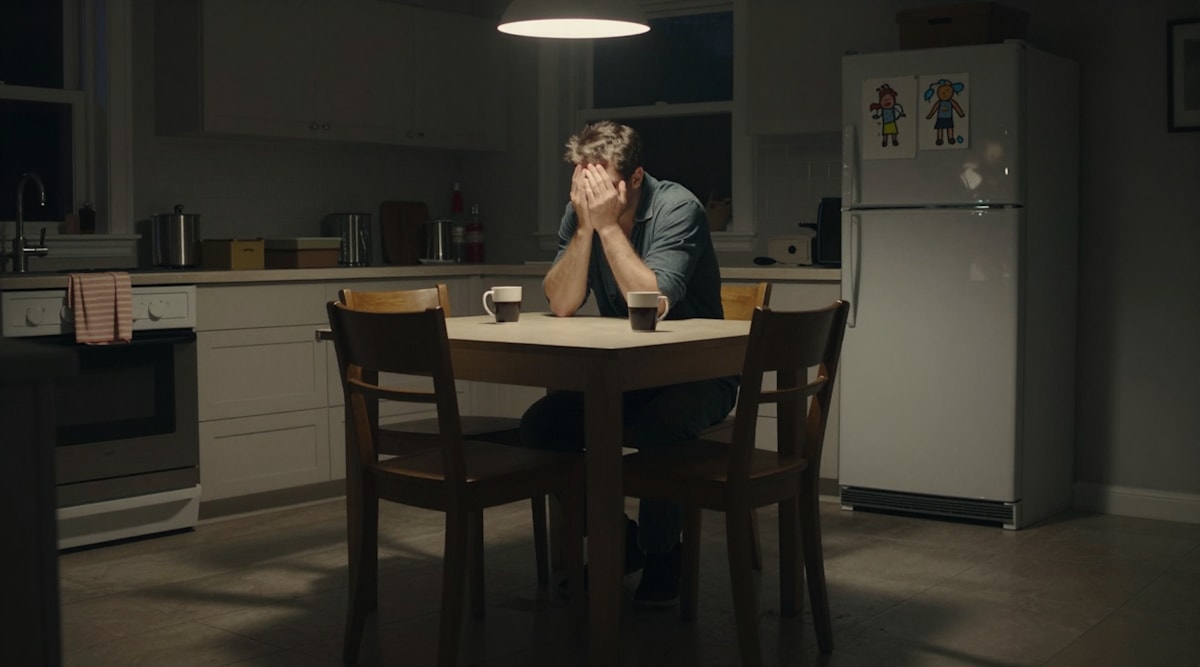
Yesterday we walked the first move at the Marriage Gate. ARREST: close your mouth before the sharp word leaves. The half-second between the trigger and the response is where the war is won or lost, and the man who halts in that half-second gives his marriage a chance. Today we walk the next two moves, and these are the ones that separate the man who merely stops himself from the man who actually changes. ARREST keeps you from doing damage. AUDIT and ALIGN tell you what you were about to damage in the first place.
Most men will run ARREST and think they have run the Protocol. They bite their tongue. They walk out of the room instead of escalating. They congratulate themselves for the restraint and call it growth. The restraint matters. A man who arrests without auditing has not solved anything. He has suppressed a reaction. The round is still chambered. The only difference is that he did not pull the trigger tonight, and it will still be waiting tomorrow when the same trigger gets pulled in a slightly different kitchen.
The failure mode at the Marriage Gate runs deeper than escalation. The failure mode is that men audit arguments to win them, not to understand them. This is the default setting. The moment the conflict starts, the mind shifts into case-building mode. You start collecting evidence. You start cataloging every instance where she did the same thing she is accusing you of doing. You rank the severity of her offenses against yours. You are not listening to understand what is happening between you. You are listening to assemble a closing argument. The Prosecution Reflex. Every married man has it. The question is whether you recognize it when it activates and whether you have a protocol for overriding it.
Solomon saw this pattern three thousand years ago and gave it a name that has not aged a day. "A gentle answer deflects anger, but harsh words make tempers flare" (Proverbs 15:1, NLT). Notice the direction. The gentle answer does not win the argument. It does not prove the case. It deflects the anger, which is a different goal entirely. The harsh word. The one that wins the point, the one that lands perfectly, the one that makes her go quiet because she has no response. That word makes tempers flare. The man who audits to win is the man who walks out of the kitchen feeling righteous and walks back into the bedroom alone. He won the argument. He lost the marriage he was trying to protect.
Here is the Audit question that actually works at the Marriage Gate. It is not "Is my position correct?" It is not "Is her criticism fair?" It is not even "What did I do wrong?" At least not yet. The question that actually works is this: what was already happening inside me before she said the first word? Almost always the answer is one of three things. Fear. Shame. Hurt. Fear that you are failing as a provider and her complaint about the dishes is not about the dishes and you both know it. Shame that you did something you have not faced yet: something at work, something in your thought life, something in the way you spoke to the kids. Her words landed on a wound that was already bleeding under the surface. Hurt that she does not see how hard you are trying, that the effort you are pouring into this family is invisible to her and her criticism landed on the one spot where you needed to be seen instead of corrected. Fear, shame, hurt. Those are the three things beneath most marital anger. The man who audits only the surface argument never finds them. The man who audits the argument to win is actively avoiding them, because finding them would mean admitting weakness, and no man wants to admit weakness in the middle of a fight he is trying to win.
This is where the Brotherhood Gate becomes load-bearing at the Marriage Gate. You cannot run a clean Audit on your own anger. The mind that just got triggered is not a reliable witness to itself. The Audit that happens in your own head while your defenses are up will always confirm that you are right and she is overreacting. Every married man's internal Audit lies when his wife has just said something that hit a nerve. The only way to catch the lie is to have a brother who will ask the question you will not ask yourself. "Brother, what were you feeling before she said the first word?" That question, from a man who has permission to contradict you, is worth an hour of self-examination. The man who does not have that brother is running the Protocol with a compromised Auditor. Ecclesiastes puts it plainly: "A person standing alone can be attacked and defeated, but two can stand back-to-back and conquer. Three are even better, for a triple-braided cord is not easily broken" (Ecclesiastes 4:12, NLT). The triple-braided cord at the Marriage Gate is you, your brother, and the Spirit. Cut the brother out and the cord frays at the first real tension.
After the Audit names what is underneath, ALIGN brings in the Witnesses. Most men skip ALIGN because they think the Audit was the work. They figured out they were afraid, or ashamed, or hurt, and that felt like the conclusion. The conclusion is the finding. ALIGN is the conviction. It is the step where you place your finding next to what God has actually said and let the gap between them become instruction rather than condemnation.
Paul writes to the church at Ephesus with a command that cuts straight through the male instinct to escalate. "And 'don't sin by letting anger control you.' Don't let the sun go down while you are still angry, for anger gives a foothold to the devil" (Ephesians 4:26-27, NLT). Two things in these verses that most men misread. The command is not "do not feel anger." Paul assumes you will feel anger. The command is "do not let anger control you." There is a world of difference between feeling an emotion and being governed by it. The entire Protocol exists as that wall. The second command is "do not let the sun go down while you are still angry." Most men read this as a command to resolve the conflict tonight. Finish it tonight. Win it tonight. That is not what Paul is saying. He is saying that unresolved anger is an open gate. It is not permission to escalate. It is a warning that going to bed with anger still in the room lets the enemy walk through a door you were supposed to guard.
James gives the posture. "Understand this, my dear brothers and sisters: You must all be quick to listen, slow to speak, and slow to get angry. Human anger does not produce the righteousness God desires" (James 1:19-20, NLT). Three commands and the order matters. Quick to listen. That is ARREST, holding the tongue long enough to receive what is being said. Slow to speak. That is AUDIT, refusing to let the first thing that rises be the thing that exits. Slow to get angry. That is ALIGN, letting the Witnesses examine the anger before you let it fuel a response. The order is the Protocol. James wrote it two thousand years before the Watchman's Protocol got its name, but the structure is the same because the structure is true.
The third Witness, after Scripture and counsel, is conscience. Every married man knows this feeling even if he has never named it. The words are forming. The closing argument is assembling itself in your chest. Something is going to come out of your mouth in the next three seconds, and something quieter underneath is saying stop, you are about to say something you cannot unsay, this is the wrong war. Most men override it. They call it hesitation, weakness, losing the edge. The governed man names it for what it is: the third Witness, the quiet knowing that the Spirit puts in a man who has spent enough time in Scripture and enough time with brothers that his conscience has been calibrated to recognize the difference between righteous anger and the flesh in costume.
Here is the question ALIGN forces: is this anger going to produce the righteousness God desires, or is it going to produce a crater? If the answer is crater, you do not get to proceed. The anger does not get to leave the room. ARREST holds the door. ALIGN decides whether the door opens.
ACT at the Marriage Gate is almost never a speech. Most men want it to be the moment they explain themselves and she finally understands. That is the case-building impulse dressed up as reconciliation. ACT is usually something much smaller and much harder. After you have arrested the sharp word, audited the fear or shame or hurt underneath, and aligned the finding with the Witnesses, what is left is not a closing argument. What is left is an honest sentence. "I got defensive because I was already carrying something from work and your comment landed on an open wound." That sentence costs more than any accusation. It is harder to say than any sharp word. It is the sentence that turns an argument into a conversation, and it might be the bravest thing a man says all week.
Solomon again: "Guard your heart above all else, for it determines the course of your life" (Proverbs 4:23, NLT). The heart is the gate. What comes out of it in the kitchen at 9 PM determines the course of your marriage. Guarding the heart means governing what exits through it. The words you do not say are just as important as the ones you do. The one honest sentence about what was really happening is worth more than a thousand sharp words.
The marriage does not need you to win. The marriage needs you to govern yourself. The man who audits to win fights the wrong war. The right war is the one against the fear and shame and hurt that weaponize his tongue before he knows he is holding a weapon. The right war is the one he fights on his knees after the argument is over and he is alone with what the Audit found. The right war is the one he fights with his brother on the phone the next morning. The war against his wife was never the real war. It was a skirmish his flesh started to avoid the war he was actually supposed to fight.
Leadership Challenge: This week, the next time you feel the heat rising in a conversation with your wife, do not just arrest the sharp word. Run the full Audit. Ask yourself out loud, in the moment: "What was I already feeling before she said that?" If the answer is fear, name the fear. If the answer is shame, name the source. If the answer is hurt, name the wound. Then text one brother in your Jury. Do not complain about your wife. Say exactly this: "Brother, I almost escalated an argument tonight because I was carrying [fear / shame / hurt] and her words landed on it. I caught it before it went off, but I need you to know that is what was happening." That text is the difference between a man who bit his tongue and a man who governed his heart. Send it. Then tomorrow, tell your wife the honest sentence you found: "I realized last night that I got defensive because I was already feeling X." That sentence may be the most important one you say all month.