A completed project can hide unfinished leadership. The dashboard turns green, the launch announcement goes out, and everyone agrees that the work is done. Meanwhile, one person carries knowledge nobody else has, an exhausted team has learned to conceal bad news, and a promise made under pressure still needs correcting. The achievement may be real. The conclusion may be premature. September’s study of Elijah and Nehemiah brings us to this distinction: faithful leadership receives and serves the assignment God gives without mistaking its most visible result for the whole work. What happened matters. What happens in people, including the leader, matters too.
Elijah reaches Mount Sinai after fleeing Jezebel’s death threat. The prophet who confronted Israel’s idolatry now believes he stands alone. God has supplied food and rest before addressing him on the mountain. In 1 Kings 19:15-18, NLT, the Lord sends him back with commissions concerning Hazael, Jehu, and Elisha, who will succeed him. The passage concerns God’s judgment on Israel’s broken obligations to Him, not permission for leaders to punish workplace opponents. It also corrects Elijah’s account of the situation. God is preserving people the exhausted prophet cannot see:
Yet I will preserve 7,000 others in Israel who have never bowed down to Baal or kissed him! (1 Kings 19:18, NLT, excerpt from the assigned passage)
Elijah’s view is incomplete; God’s work is larger than his sight. The chapter closes with Elisha answering the call and becoming Elijah’s assistant. It does not report Elijah personally completing every royal anointing in the commission. The successor matters because the assignment reaches beyond one man’s activity. Elijah receives another responsibility without becoming the whole means by which God will accomplish His purposes. Our application is limited but searching: a leader’s sense of isolation cannot establish that nobody else is faithful or that everything depends on the leader remaining indispensable.
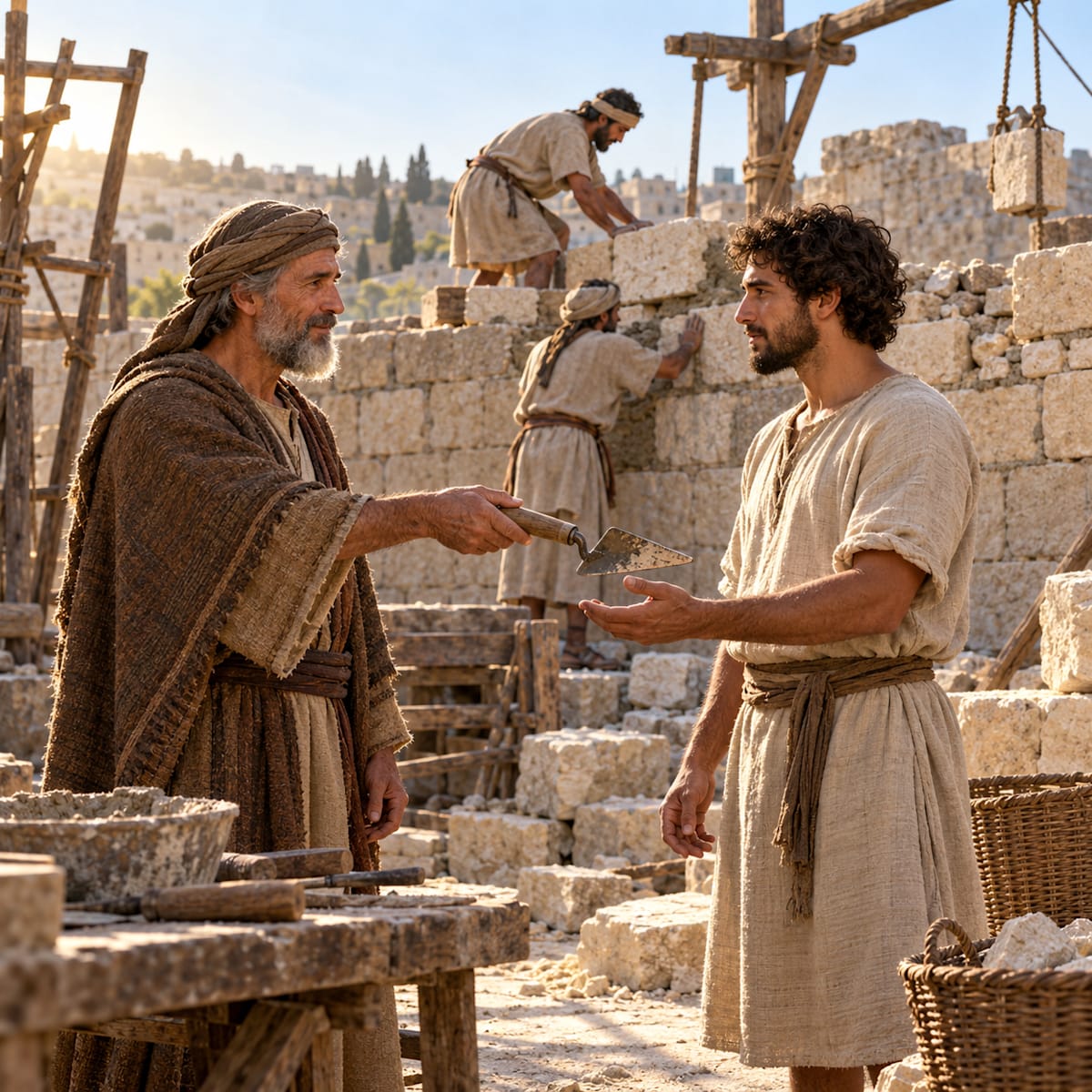
Nehemiah receives a visible finish Elijah does not receive in this scene. Jerusalem’s wall is completed in fifty-two days. The setting is the restoration of a vulnerable Jewish community after exile, and chapter 6 recounts repeated attempts to lure, frighten, and discredit its governor. Nehemiah resists those attempts, continues the work, and prays. The narrative credits the accomplishment to God rather than treating the schedule as proof of a universally repeatable technique. Even the surrounding enemies recognize the source of help:
They realized this work had been done with the help of our God. Nehemiah 6:16, NLT, excerpt from the assigned passage, Nehemiah 6:15-16)
The finished wall is worth celebrating. It is also part of a larger responsibility. In Nehemiah 8, NLT, Ezra reads God’s Law while the Levites help the gathered people understand it. Later, Nehemiah 13, NLT records neglected provision for worship and broken commitments that require correction. The work in the people continues after the work in the stone. This is no argument against deadlines or measurable results. It asks whether the result serves the purpose for which it was sought. A strong institution can still house weakened commitments, and a celebrated reform can still need repair.
These narratives require more than admiration before we turn them into guidance for Christian professionals. Peter gives believers direct instruction about prayer, love, hospitality, and using their gifts to serve one another in God’s household. Regarding helping others, he writes, “Do it with all the strength and energy that God supplies.” (1 Peter 4:11, NLT, excerpt) The chapter also prepares Christians for suffering and calls them to continue doing right while entrusting themselves to their Creator. Christian service depends on God’s provision and aims at His glory through Jesus Christ. This service is a response to God’s grace in Christ, not a way to earn His acceptance. Applying that allegiance at work cannot turn it into a promise of promotion, a successful launch, or immunity from loss.
This is where the month’s practices belong together. Receiving an assignment means discerning the responsibility you actually hold rather than adopting a heroic role you admire. Truthfulness exposes what the celebration has concealed, and prayer brings our motives and methods before God. Caring for people includes protecting their capacity to continue, even when opposition tempts us to demand more or to compromise. Endurance honors limits rather than making exhaustion the standard. Correction addresses the drift; preparing others keeps responsibility from ending with us. In The Decision Fortress, I develop repair and legacy as ordinary obligations. The Work Gate chapter of The Watchman’s Protocol for Men examines the danger of making career achievement the measure of your identity. Faith-work integration brings those questions into the decisions you make on Monday.
Imagine a department leader whose team has completed a difficult client migration. The client can use the new system, but an analyst knows the remaining exceptions, two people have worked unsustainable hours, and the final report calls unresolved issues minor without supporting evidence. The leader’s next assignment is to make the success truthful and sustainable. She corrects the report, asks the analyst to teach another colleague, gives that colleague time and authority to learn, and protects recovery time for the people who carried the surge. She invites the client into a clear discussion of what remains. None of this cancels the accomplishment. It serves the people and commitments the accomplishment was supposed to support. Some of it may cost her praise. Faithfulness remains the measure when the applause becomes less convenient.
Take one current assignment and write the next week of responsibility on a single page. Name the people it serves and the outcome you are seeking. Identify one statement that needs correcting, one responsibility that needs a clear owner, and one person who needs support to carry the work after you. Ask that person what knowledge, authority, and time are missing rather than assigning succession as extra labor. Set a review date and specify the evidence you will inspect. Include a limit you will honor, such as refusing another week of routine evening work to protect a date that needs renegotiating. Pray over the page before acting and return to prayer during the conversations it requires. If you are still exploring faith, the same page can help you examine the people and responsibilities your work serves. The page cannot control the result. It can make your next faithful step concrete.
As this month’s series closes, I invite you to use the forthcoming paid Stand and Rebuild: A Biblical Leader’s Field Guide to Courage, Dependence, and Endurance to examine one assignment you are carrying. The guide will bring the month’s practices into a framework for discernment and action; its publication and reader resources are still being prepared. You can begin the work before it arrives. Stand where truth requires courage. Rebuild where responsibility requires repair. Receive help, honor limits, and prepare someone else to continue. Elijah’s limited view did not limit God’s preserving work. Nehemiah’s completed wall did not complete the community’s formation. Lead the portion entrusted to you with that same humility about how much remains beyond your sight.
Leadership Challenge
Which current assignment looks finished while people or commitments still need care? Write one truthful correction, one responsible owner, one supported successor, one review date, and one limit you will honor. Complete the first conversation this week.
I write about leadership at the intersection of timeless principles and modern workplaces. Follow for weekly insights on building teams that actually work. For more articles like this consider subscribing to my Substack at: https://christianleadership.now