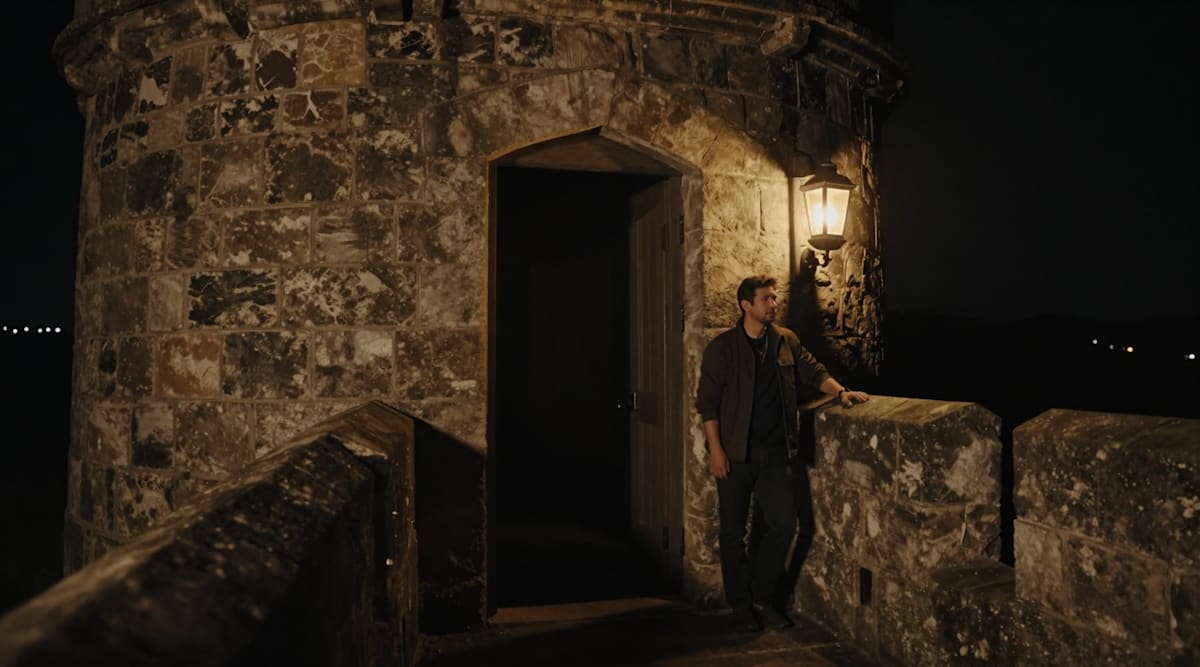
The man who just fell did not plan to fall this morning. He woke up, made coffee, checked his phone, and lived through an ordinary Tuesday that did not feel like a test until the test was already over. The image appeared on the screen without warning. The thought arrived during a moment of boredom. The conversation with a coworker drifted into territory that felt more alive than the conversation waiting for him at home. Nobody wakes up intending to compromise their integrity. Nobody schedules a fall. The failure happens in the gap between the arrival of temptation and the arrival of a response. If the gap is empty, if there is no plan, no reflex, no protocol already installed, the outcome is almost always the same. The Integrity Gate is where the Protocol was built to do its most urgent work, because this gate does not give you time to figure it out on the spot.
The failure mode at the Integrity Gate has a name: the drift. Not the dramatic fall. Not the spectacular moral collapse that makes a sermon illustration. The drift is quieter. It is the man who has never been caught but has also never been clean. The man whose browser history would not end a marriage but would wound a wife. The man whose thought life is a room he keeps locked, and over years of entering that room alone, the lock has rusted shut. The drift is the slow accumulation of ungoverned moments: the second look that became a habit, the habit that became a hunger, the hunger that became a second life. Paul writes to the Corinthians with a directness that leaves no room for negotiation: "Run from sexual sin! No other sin so clearly affects the body as this one does. For sexual immorality is a sin against your own body. Don't you realize that your body is the temple of the Holy Spirit, who lives in you and was given to you by God? You do not belong to yourself, for God bought you with a high price. So you must honor God with your body" (1 Corinthians 6:18-20, NLT). The command is not to resist. It is to run. The Protocol is the plan for running before the running becomes impossible.
ARREST at the Integrity Gate happens at the level of a single thought. Most men believe the battle is won or lost at the level of action. They are wrong. The battle is won or lost three steps earlier, when the first image registers and the mind decides whether to dwell or dismiss. The ARREST here is a thought-level intervention. The moment you become aware of a thought, an image, or an impulse that you would not want projected on the wall in front of your wife and your brothers, you arrest it. You do not entertain it for three seconds to see where it goes. You do not file it for later. You shut the gate. Proverbs names the stakes: "Guard your heart above all else, for it determines the course of your life" (Proverbs 4:23, NLT). Guard. Not resist after it is already inside. Guard means you stop it at the perimeter. The man who lets the thought linger and promises himself he will deal with it later is a man who has already lost the engagement. The thought does not stay a thought. It recruits the imagination. The imagination recruits desire. Desire recruits the body. The sequence happens fast enough that you can miss it if you are not watching.
The AUDIT at the Integrity Gate asks a question that strips away the excuses: what conditions were in place when the temptation arrived? The answer is almost always one of two things: loneliness or exhaustion. When a man is connected to his wife, his brothers, and his God, temptation still comes, but it does not find a room already prepared for it. When a man is isolated and tired, the gate is already open before the temptation arrives. James traces the progression with surgical precision: "Temptation comes from our own desires, which entice us and drag us away. These desires give birth to sinful actions. And when sin is allowed to grow, it gives birth to death" (James 1:14-15, NLT). Notice the verbs. Entice. Drag. Give birth. Grow. The language is biological. Temptation is not a courtroom argument you can outthink. It is a living thing that feeds on the conditions you give it. The AUDIT does not ask whether you are strong enough to resist temptation. It asks whether you are living in a way that makes resistance unnecessary. Most men who fail at the Integrity Gate did not fail in the moment of temptation. They failed three days earlier when they isolated themselves, stopped sleeping, stopped talking to their brothers, and created the conditions where failure was almost guaranteed.
ALIGN brings the Three Witnesses to a gate where self-deception runs deeper than at any other. The man struggling with integrity has a story he tells himself. It is not his fault. It is not that bad. Everyone struggles with this. The culture normalizes it. What happens in private does not affect anyone else. The story has a hundred variations, and they all serve the same purpose: to keep the gate unguarded while convincing the watchman he is still on his post. Scripture dismantles this story with the temple language Paul uses. Your body is not yours. It was bought with a price. The privacy argument collapses the moment you accept that the room you think is private belongs to Someone else. The Jury dismantles the isolation that feeds the pattern. The Integrity Gate cannot be guarded alone, because the drift depends on secrecy, and secrecy cannot survive exposure. The man who tells one brother what he is actually struggling with has already removed the primary weapon the enemy uses against him. Conscience dismantles the normalization. The culture may say every man struggles with this. The culture may say it is not a problem. Your conscience knows better, and it has been trying to get your attention for years.
The connection between the Integrity Gate and the Anger Gate is not a coincidence. Yesterday we walked through the Anger Gate, and the shared mechanism should be impossible to miss. The same man who cannot arrest a sharp word in three seconds cannot arrest a thought in one. The same AUDIT that finds exhaustion beneath anger finds exhaustion beneath lust. The same ALIGN that brings the Witnesses to interrogate a justification for rage brings them to interrogate a justification for a second look. The gates are not separate rooms. They share walls. The man who practices arrest at one gate is strengthening the muscle the other gate requires. The man who lets both go ungoverned is not fighting two separate battles. He is losing one war on two fronts.
ACT at the Integrity Gate is where the Protocol moves from theory to concrete plan. The most important thing to understand is that ACT does not mean resist. It means flee. Paul's word choice is precise. He does not say stand and fight. He says run. The difference matters. Resistance assumes you are strong enough to stay in the room and not give in. The Protocol assumes you are not, because no man is. Flight means you remove yourself from the situation before it requires strength you do not have. Here are the Standing Orders that work. First, the zero-second rule for images: when an image appears on a screen that you know should not be there, you close it before you finish the thought of whether you want to. The gap between seeing and deciding is where the drift begins. Close the gap and the drift has nowhere to start. Second, the accountability lock: install software on every device that sends your browsing history to a brother who has permission to ask about anything he sees. The knowledge that someone will see it changes what you are willing to look at. Third, the sundown text: if you have been alone with a screen after dark and the drift has had access, you text one brother before you go to sleep. The text does not have to be a confession. It can be as simple as "Ping me in the morning." The point is that secrecy cannot survive the light, even a small one. Fourth, the conditions audit: you identify the two conditions that most reliably precede a failure at this gate. They are almost always some version of tired or alone. Then you install a response for each. When you are exhausted, you do not open a screen after 10 PM. When you are isolated, you call a brother before you open a browser.
The Tuesday afternoon takeaway is this. Install one Standing Order at the Integrity Gate today. Not three. Not a whole system. One. Pick the one that addresses your specific failure pattern. If images arrive unbidden, install the zero-second rule. If isolation is the condition, install the 10 PM call. If secrecy sustains the pattern, install the sundown text. The Protocol is not overwhelmed by the size of the problem because the Protocol does not ask you to fix everything at once. It asks you to govern one gate, one decision, one moment at a time.
The Integrity Gate is not a gate you conquer. It is a gate you guard every day for the rest of your life. The temptations will not stop arriving. Paul promises something more realistic than immunity. He promises a way out: "The temptations in your life are no different from what others experience. And God is faithful. He will not allow the temptation to be more than you can stand. When you are tempted, he will show you a way out so that you can endure" (1 Corinthians 10:13, NLT). The way out is not the absence of temptation. It is the Protocol already installed when the temptation arrives. The man who has a plan is not a man who never faces the test. He is a man who has already decided what he will do when the test shows up. The drift depends on your not having made that decision in advance. The Protocol is the decision, made on a Tuesday afternoon while the gate is quiet, so that when the gate is under pressure, you do not have to invent the response. You have already chosen.
Leadership Challenge: This week, install one Standing Order at the Integrity Gate. If images are the pressure point, close every screen before 10 PM and text one brother that you are going to bed. If isolation is the pattern, call one brother this week and tell him one thing you have been carrying alone. If secrecy sustains the drift, install accountability software today and give the report to a brother who has permission to ask.
I write about leadership at the intersection of timeless principles and modern workplaces. Follow for weekly insights on building teams that actually work. For more articles like this consider subscribing to my Substack at: https://christianleadership.now