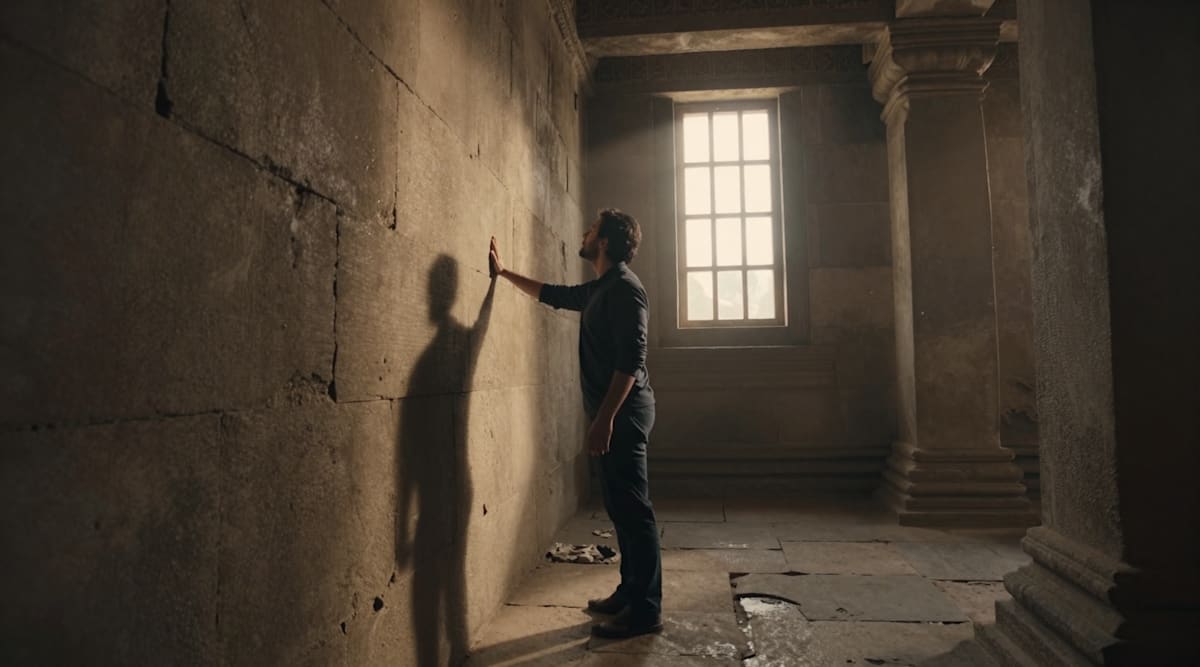
The man wakes up at five thirty, pours a cup of coffee, and does not eat anything until noon. He calls it intermittent fasting. He calls it discipline. His body calls it something else, and his body keeps a ledger he never checks. Three years from now, his doctor will use words like cortisol and inflammation and chronic stress response, and the man will nod as if he is hearing new information. He is not hearing new information. He is hearing an invoice come due for small neglects he dismissed as toughness. The Health Gate is the one men most successfully reframe as virtue. The skipped meal is productivity. The four hours of sleep is dedication. The extra drink after a hard day is recovery. Every one of these moves borrows against a body you do not own, and the lender charges compound interest. The man who will not steward his body cannot steward anyone else's for long, because the body is the delivery system for every other responsibility you carry.
The failure mode at the Health Gate has a specific shape, and it is not what the culture says it is. The culture will tell you the problem is the dad bod, the soft midsection, the lack of visible fitness. The culture is lying. The real failure mode is the quiet assumption that the body is a machine you own and can operate on whatever terms you choose, until the terms stop working and the machine stops cooperating and you discover you were never the owner at all. Paul dismantles this assumption with surgical precision: "Don't you realize that your body is the temple of the Holy Spirit, who lives in you and was given to you by God? You do not belong to yourself, for God bought you with a high price. So you must honor God with your body" (1 Corinthians 6:19-20, NLT). The word Paul uses is temple, not machine. A temple is not owned by the priest. It belongs to the God who dwells in it. The priest stewards it. He maintains it. He approaches it with reverence because something holier than himself is inside. The man who treats his body like a machine he can redline until the engine seizes has misunderstood entirely whose body he is running into the ground.
This misunderstanding shows up in the small daily negotiations that do not feel like gate failures because they arrive one at a time. The second beer on a Tuesday night. The fourth cup of coffee to compensate for five hours of sleep. The lunch eaten at your desk in seven minutes because stopping feels like weakness. The sleep you trade for productivity because the hour between eleven and midnight is the only one that belongs to you. None of these registers as a failure in the moment. Each one is justified by a story you have been telling yourself for twenty years: I am tough. I can handle it. Rest is for people who do not have responsibilities. That last sentence is the most dangerous lie of all, because every leadership act you perform runs on a physical substrate you are actively degrading.
ARREST at the Health Gate is the move men resist most, because stopping to examine the body feels like stopping to examine the vehicle when you should be driving. The enemy of ARREST here is the deeply masculine conviction that attention paid to the body is attention taken from the mission. The man who pauses to ask whether he has eaten, whether he has slept, whether he is running on fumes and stimulants feels soft to himself. The Protocol does not ask him to become a wellness evangelist. It asks him to become a governed man, and a governed man knows the difference between ignoring his body and stewarding it. The ARREST is simple in form and brutal in application. Before you pour the next drink, stop. Before you skip the next meal, stop. Before you trade the next hour of sleep for productivity, stop. The body will not send you a calendar invite when it breaks. It will just break, and every person who depends on you will absorb the cost.
The AUDIT at the Health Gate applies the H.A.L.T. framework to the physical deficits men are trained to ignore. Are you hungry? Not in the sense of wanting a snack, but in the sense of having underfueled your body across twelve hours while calling it focus. Are you angry at the accumulated friction of running a body on empty, which comes out as irritability directed at the nearest target? That target is usually your wife, usually your children, usually the coworker who did not deserve it. Are you lonely? Physical neglect and relational isolation share a root: the belief that you can operate without maintenance because you are supposed to be stronger than that. Are you tired? This is the most dangerous question in the H.A.L.T. framework for the Health Gate, because tired is the condition men are proudest of. I am exhausted means I am working hard. I am working hard means I am providing. I am providing means I am a man. The AUDIT dismantles this chain by asking what happens when the exhausted man is needed for something that requires more than exhausted reflexes. The exhausted man cannot govern himself, because self-governance requires executive function that sleep deprivation systematically destroys.
The ALIGN at the Health Gate has to do its work against an especially stubborn cultural wind. The culture tells men that ignoring the body is toughness. The Witnesses tell a different story. Scripture frames the body as something given, not something built. The body is on loan. You did not earn it. You receive it every morning when you wake up, and the fact that it kept working through the night is not evidence that you treated it well. It is evidence that God is more patient than you are responsible. Proverbs warns that "a person without self-control is like a city with broken-down walls" (Proverbs 25:28, NLT). Self-control is not just about anger and integrity and the sharp word held back. It is about the very frame that carries you into every other battle. Paul understood this connection between the physical and the spiritual in terms a man can hear: "I discipline my body like an athlete, training it to do what it should. Otherwise, I fear that after preaching to others I myself might be disqualified" (1 Corinthians 9:27, NLT). The word is discipline. Not pampering. Not vanity. Discipline: making the body do what it should, so that the man can do what he must.
The ACT at the Health Gate is where men most often go wrong in two directions. The first error is overcorrection: signing up for a Spartan race, buying a fitness tracker, treating the body like a project to be conquered rather than a temple to be stewarded. This burns hot for three weeks and then collapses into the same neglect, only now with added shame. The second error is dismissal: concluding that because the body is spiritualized in Scripture, physical care must be secondary. Neither error survives contact with the Protocol. The ACT at the Health Gate is not a fitness plan. It is a set of Standing Orders that govern the small daily decisions where the gate actually swings open. First, the sleep order: you will be in bed with the lights out by a defined hour, and the hour does not shift. Second, the fuel order: you will eat three meals at defined times, and none of them will happen at your desk while answering email. Third, the movement order: you will move your body daily, not to achieve a physique, but to remind the frame that it was built for action. Fourth, the ceiling order: alcohol is not recovery. One drink is one drink. The second drink is a gate failure the Protocol was built to catch.
The connection between the Health Gate and yesterday's Digital Gate is closer than most men want to admit. The phone erodes sleep through blue light and late-night scrolling. It erodes movement through the couch gravity that pins you in place. It erodes nutrition through distracted eating. Govern the Digital Gate, and the Health Gate gets easier. Govern the Health Gate, and every other gate gets stronger, because the man who is rested, fueled, and physically grounded is harder to provoke, harder to tempt, harder to exhaust into the default reflexes that cost him his integrity. The gates are not separate rooms. They share walls. The Health Gate is one of the load-bearing ones, and most men are letting it crumble while congratulating themselves on how hard they are working.
The man who will not steward his body is borrowing against everyone who needs him. The wife who gets his exhausted irritability at the end of the day. The children who get the father who is too tired to play. The employees who get the leader who makes snap decisions because he does not have the cognitive reserves for patience. Neglect of the body is not a private sin. It is a public withdrawal from the account of everyone who depends on you, and the account will eventually run dry. The collapse, when it comes, will not feel like a gate failure. It will feel like a heart attack at fifty-three, or a divorce that happened because he was never actually present, or a burnout that took him out of ministry for two years while everyone around him paid the price he thought he was paying alone. The Health Gate is not about living forever. It is about being fully present for the years you are given, with a body that can carry the weight of the responsibilities you have accepted.
The Tuesday afternoon takeaway is simple enough to feel insulting and hard enough to expose where you actually are. Pick one Standing Order for the Health Gate and install it today. If you have been running on five hours of sleep, set a lights-out time and keep it for one week. If you have been skipping meals, eat three meals at a table, not a desk, for one week. If you have been treating alcohol as a recovery tool, cap it at one drink for one week and notice what you reach for when the second drink is not available. Do not pick three. Pick one order, the one where the neglect is deepest, and govern that gate for seven days. The Protocol does not demand perfection. It demands governance, and governance starts with one gate you decide will not swing open again today.
Leadership Challenge: This week, pick one Standing Order for the Health Gate and govern it for seven consecutive days. If sleep is your battleground, set a lights-out time and do not break it. If nutrition is your battleground, eat three meals away from your desk. If your body has been running on neglect disguised as toughness, pick the area where the neglect is most obvious and install one order. Then tell a brother what you are doing so the Audit has teeth. At the end of the week, ask yourself: did I steward the body I was given, or did I keep borrowing against it and calling it discipline?
I write about leadership at the intersection of timeless principles and modern workplaces. Follow for weekly insights on building teams that actually work. For more articles like this consider subscribing to my Substack at: https://christianleadership.now