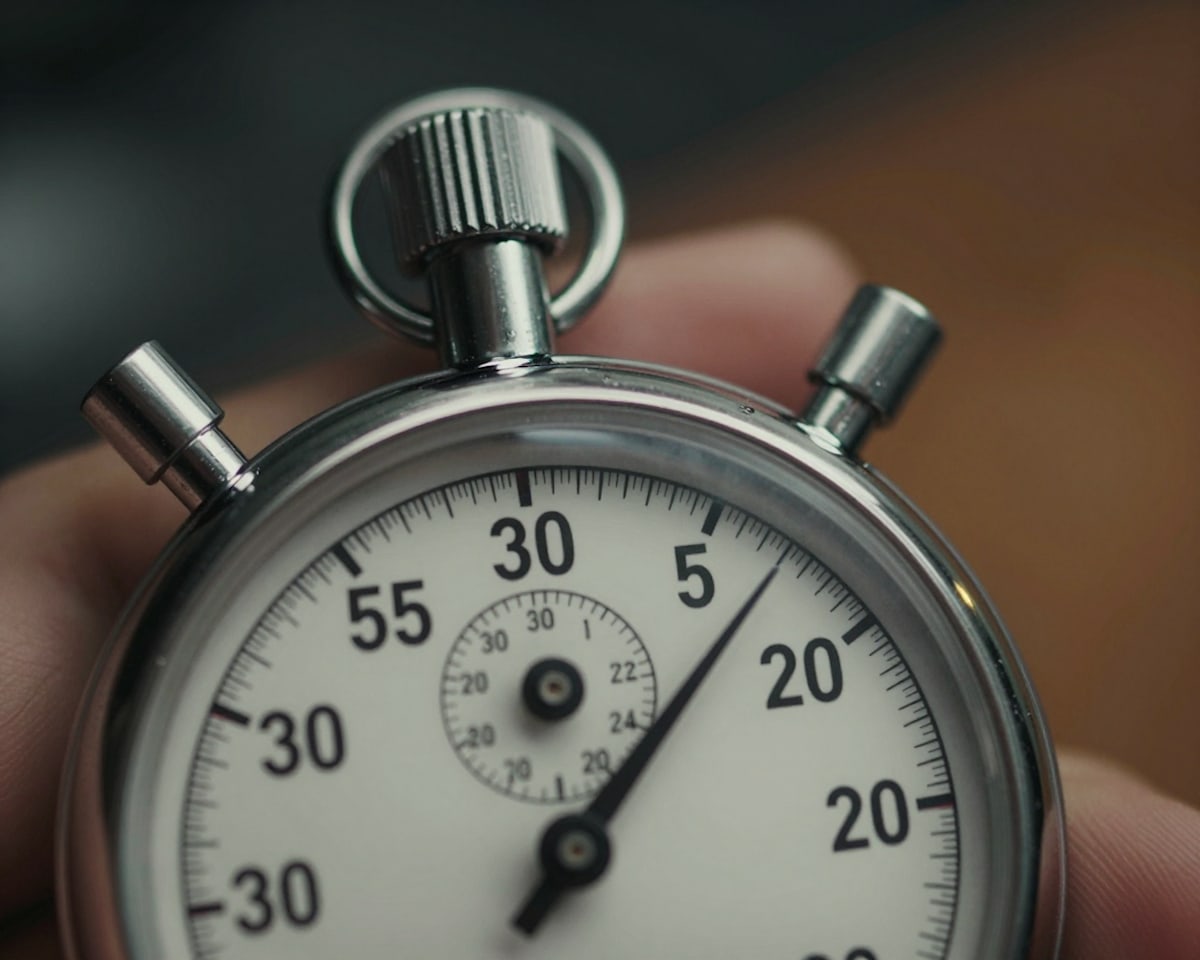
The email arrives at 9:47 AM. Your boss questions your judgment on a decision you made last week. You read it twice. Your chest tightens. Your face heats. Your fingers hover over the keyboard, already forming a defense. This is the moment. Not five minutes from now when you have already typed three paragraphs explaining why you were right and they are wrong. Not this afternoon when you are telling your spouse how unreasonable your boss is. Right now. The first thirty seconds after the trigger. This is the window when arrest is still possible. After that, you are not making decisions anymore. You are riding momentum.
We have been building the case for ARREST all week. We talked about sin having kinetic energy, about becoming the Sheriff of your own mind. Today we get practical. Because the truth is, most battles are not lost in the heat of the moment. They are lost in the first thirty seconds when you still had the option to stop but chose to let the train start rolling instead. Static friction is higher than kinetic friction. That means it takes more force to get something moving than it does to keep it moving once it starts. The hardest part is not stopping a thought after ten minutes of spiraling. The hardest part is stopping it in the first thirty seconds before it picks up speed.
Your body knows you are about to sin before your brain does. This is the gift most leaders ignore. You feel the tightness in your chest. The heat in your face. Your typing speed increases. Your breathing gets shallow. These are not random sensations; they are alarm bells. Your body is trying to tell you that something dangerous is approaching the gate, that adrenaline is flooding your system, that you are about to do something you will regret. Most of us override these signals. We tell ourselves we are fine, that we are just being honest, that this needs to be said right now. And by the time we realize we should have stopped, we have already sent the email, said the thing, clicked the link. The first thirty seconds is when your body is still screaming for you to stop. After that, your body is just along for the ride.
Here is what this looks like in real time. You feel the trigger. Your body reacts. You have about thirty seconds before the momentum becomes unstoppable. In those thirty seconds, you have three choices. First, you can ignore the warning signs and let the train roll. This is what most people do. Second, you can try to think your way out of it while staying in the environment that triggered you. This almost never works because you cannot reason clearly when adrenaline is spiking. Third, you can physically disrupt the momentum. You remove your hands from the keyboard. You close the laptop. You stand up and walk to another room. You splash cold water on your face. You do ten push-ups. You create distance between yourself and the trigger before the thirty seconds expire. The third option is the only one that works.
Tomorrow we will talk about specific physical disruption techniques, about how to derail the train once you recognize it is moving. But today, the work is simpler: learn to recognize the first thirty seconds. Start paying attention to your body. When you feel the heat rising, when your chest tightens, when your fingers start typing faster, that is not the moment to push through and finish the thought. That is the moment to stop everything and step away. The feeling is not a suggestion; it is a command. Your body is deputized by the same King who deputized your mind, and when it tells you danger is approaching, you do not ignore it. You act. You have thirty seconds. After that, the decision is already made. The email is already sent. The words are already said. The click is already clicked. The first thirty seconds is the only window when the Sheriff can still intervene. Miss it, and you are just a passenger watching the crash happen in slow motion.
I write about leadership at the intersection of timeless principles and modern workplaces. Follow for weekly insights on building teams that actually work. For more articles like this consider subscribing to my Substack at: https://christianleadership.now