An unfilled afternoon can look like a problem to a leader who measures every available hour as lost output. An unspent allocation can look like permission to add something. A healthy reserve can attract plans that would consume it before anyone asks why it exists. Abundance has its own pressure: use the margin, display the growth, make the present result larger. The question is not whether resources should ever be spent. It is whether today’s success has made tomorrow’s responsibilities easier to ignore. A leader can celebrate a good season while quietly spending the protection someone else will need when conditions change. Today’s passage in The Long Middle asks a different question of plenty: whose future need should this present margin serve?
The assigned reading is Genesis 41:47–49 and 53–57, within the whole chapter. The abundant harvests arrive, grain is gathered, and the later famine brings people to the stores. This complete short verse is the selected anchor, not the entire assigned passage:
During those years, Joseph gathered all the crops grown in Egypt and stored the grain from the surrounding fields in the cities. Genesis 41:48, NLT; read Genesis 41:47–49 on ScriptureMapping (WEB). Read Genesis 41:53–57 on ScriptureMapping (WEB).
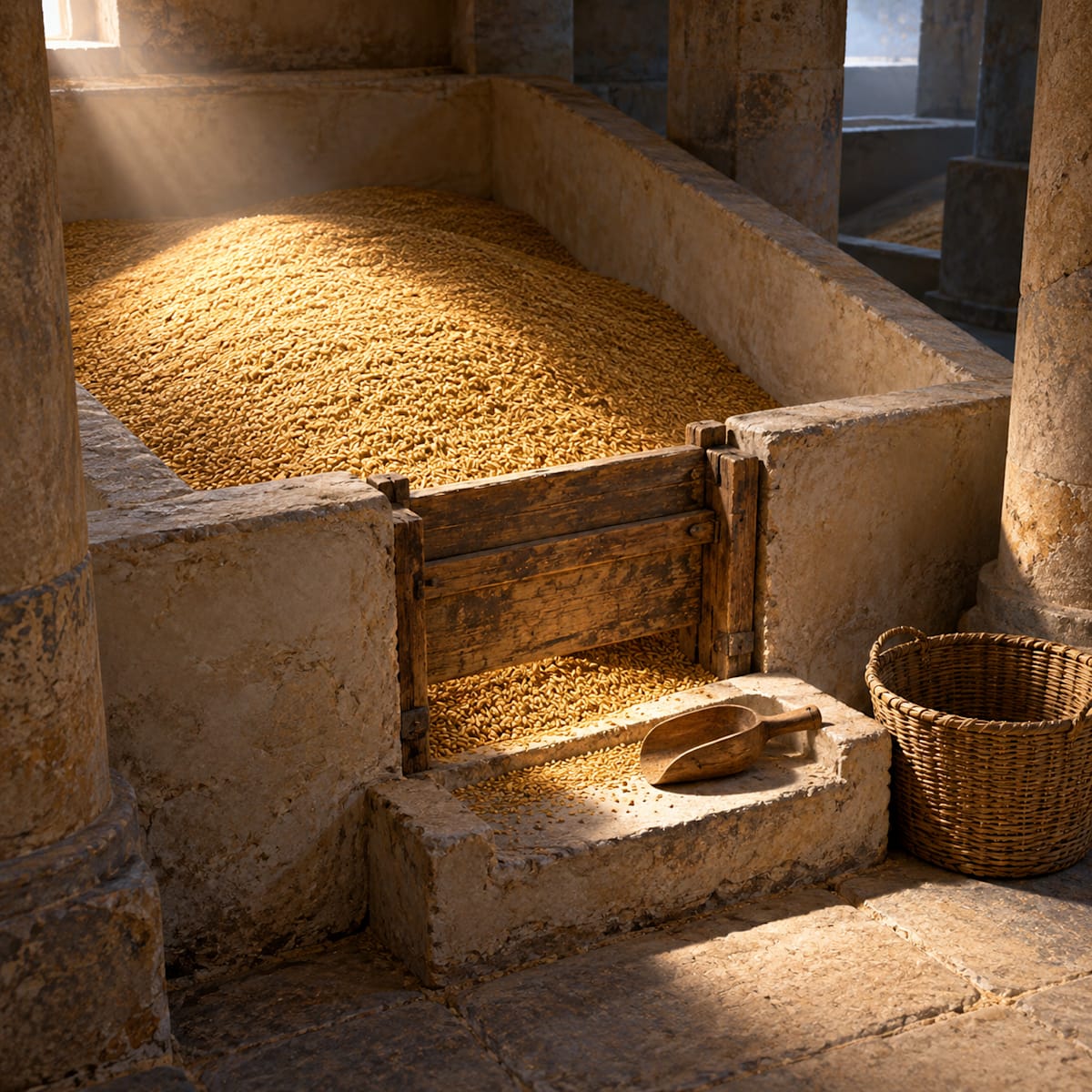
The chapter carries preparation beyond an approved proposal. Joseph uses his authority while the land is producing, rather than waiting until hunger supplies the urgency. The stored grain eventually becomes available during famine, including to buyers from beyond Egypt. Read within Genesis, that provision belongs to God’s preservation of life and the continuing history of Jacob’s covenant family. It is not an account of Joseph making himself independent of God. Neither is it a promise that disciplined leaders can prevent every crisis. The abundance, the warning, and the unfolding provision belong to this particular narrative. Our application must preserve that setting rather than treating Egypt’s administration as a ready-made policy for every workplace. The principle to examine is narrower: present capacity can be stewarded for needs that present comfort makes easy to overlook.
Joseph’s knowledge of the coming years also differs from our forecasts. We do not acquire a divine timetable by putting a risk assessment beside a Bible. We usually have incomplete evidence, competing obligations, and possibilities that may never become events. James 4:13–17 confronts confident business planning that treats tomorrow as already possessed. In contextual paraphrase, our lives and plans remain dependent on the Lord, and knowing the good requires more than speaking about it. Read James 4:13–17 on ScriptureMapping (WEB). That dependence should make preparation humble, accountable, and revisable. It need not make it absent. A leader can acknowledge uncertainty while protecting enough capacity to meet an ordinary interruption. The alternative to pretending we control tomorrow is not pretending we owe tomorrow nothing.
Preparation can also become a religious-sounding cover for accumulation. In Luke 12:13–34, Jesus responds to an inheritance dispute, warns against greed, and tells of a wealthy farmer whose stored abundance cannot secure his life. His teaching then addresses anxious disciples and directs them toward God’s kingdom and generosity. This is a contextual paraphrase, not a quotation. Read Luke 12:13–34 on ScriptureMapping (WEB). The tension belongs beside Joseph’s storehouses, not outside the discussion. Possession alone cannot tell us whether a reserve is faithful. Ask what it is meant to protect, whom it can actually help, and whether it is ever allowed to serve that purpose. A reserve that grows indefinitely while legitimate needs remain permanently ineligible may be protecting the leader’s feeling of control rather than the people named in its justification.
Consider a hypothetical department with a quieter month before a known seasonal increase in work. This is an illustration, not a report of Justin’s experience or a measured operation. The manager could fill the lighter schedule with additional commitments and call the increased output responsible use of capacity. Another choice would protect part of that interval for maintenance and recovery practice on a service the department already depends on. The relevant question is not which choice looks more industrious. It is what the existing commitments require when routine equipment fails or a key colleague is absent. Talk with the people closest to that dependency before assigning the spare time. They may know that the supposed reserve is already covering unresolved work. A margin that exists only on the manager’s calendar cannot protect a team when the need arrives.
The proposed reserve needs a purpose specific enough to govern its use. In this illustration, the team agrees to protect working time for a bounded recovery rehearsal and essential maintenance before accepting optional expansion. The manager identifies what must be deferred, obtains the authority to defer it, and records when the protected work will happen. The receiving colleagues know where the procedure is kept and who can authorize access when it is needed. None of this guarantees uninterrupted service. It makes the preparation more real than an instruction to be resilient. Check usefulness rather than merely the existence of a folder or a budget line. If the team cannot carry out the rehearsal within the agreed conditions, retain the gap and address it while help remains available. The preparation should expose weakness before an actual interruption makes it expensive to admit.
The Long View in Christian Leadership in the Professional World asks what our present choices leave for other people to carry. Applied here, that question reaches beyond the amount set aside. Who has the authority to release the reserve? What legitimate need triggers its use? When will the arrangement be reviewed? A manager can establish a sensible buffer and then undermine it by treating every use as a failure of discipline. People learn not to ask until they are already carrying the emergency privately. Establish the conditions during plenty, invite correction from those affected, and distinguish exceptional use from ordinary work the reserve was never intended to fund. This is an application accountable to Scripture, not a guarantee drawn from the book’s framework. No single percentage of time or money can settle the question for every household, team, or organization. Review the arrangement when the need changes, not only when someone wants to spend it. A reserve for obsolete equipment may need to become training for its replacement. Capacity promised to one team should not quietly fund another team’s expansion. Tell the affected people what changed and why. Keeping the original label on a resource after changing its purpose would preserve the appearance of protection while withdrawing the protection itself.
Some readers have little margin to protect. They should not hear this passage as an accusation that hardship proves inadequate foresight. Leaders must examine what they control before prescribing restraint to people already meeting basic needs. The person approving new commitments may hold choices the exhausted colleague does not. Ask whether your plan saves visible resources by spending someone else’s recovery time, household stability, or ability to ask for help. If the answer is yes, take that trade to the responsible decision-maker rather than praising the team for absorbing it. Tomorrow’s passage will turn toward Joseph’s naming of grief and fruitfulness; today’s task remains the use of what is available now. Choose one present margin, name the people and need it should protect, and establish an honest condition for using it. When that need arrives, let the provision do the work for which you kept it.
Leadership Challenge
Choose one margin within your actual authority: time, maintenance capacity, accessible knowledge, or a resource reserve. Write whom it protects, the need that permits its use, and who can release it. What optional commitment must you decline so that protection remains real?
Take the next step in applying biblical wisdom at work with my book, Christian Leadership in the Professional World. It develops a framework of humility, whole counsel, restoration or protection, and moral intuition for the decisions leaders carry.
I write about leadership at the intersection of timeless principles and modern workplaces. Follow for weekly insights on building teams that actually work. For more articles like this consider subscribing to my Substack at: https://christianleadership.now