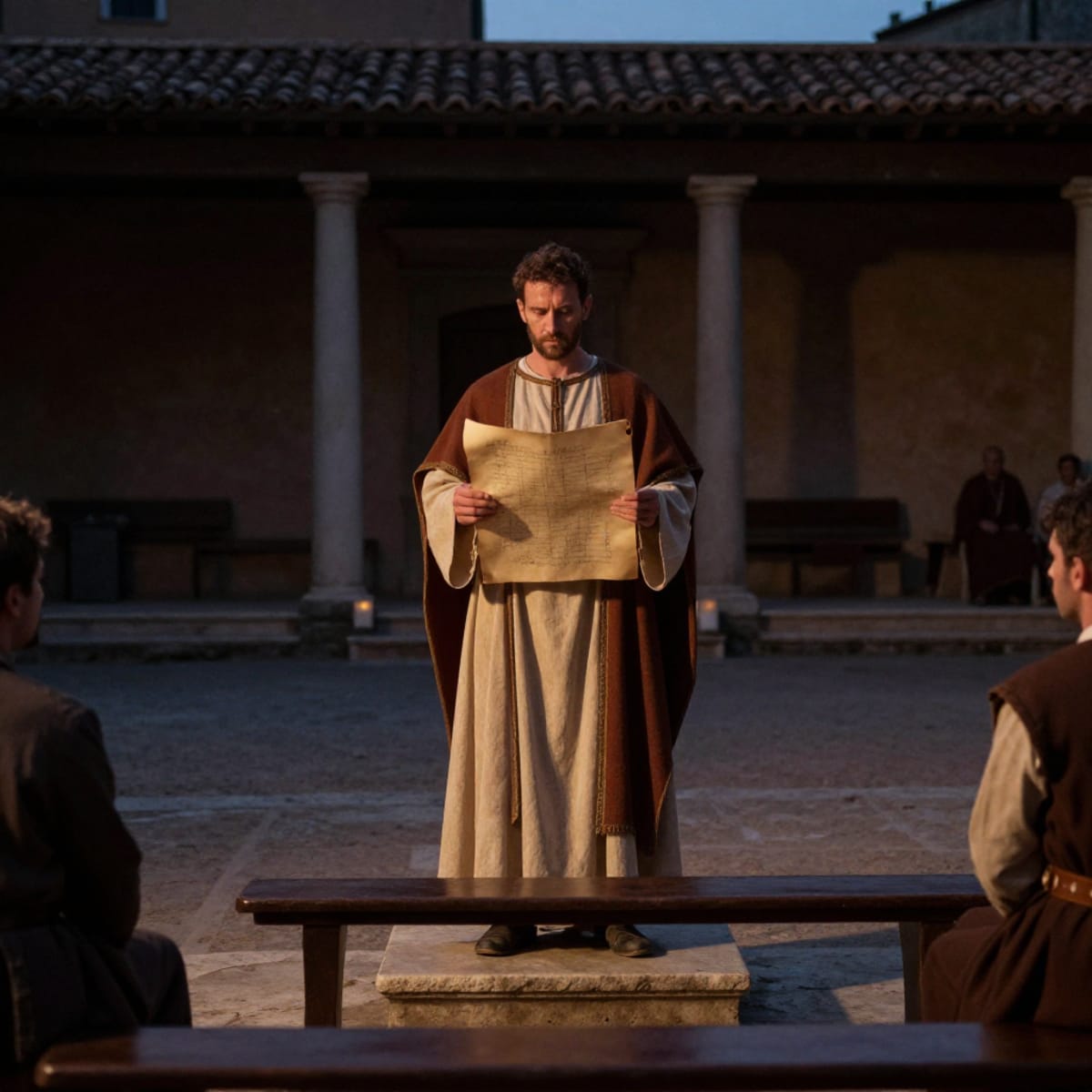
The director kept a draft in a notes app for eleven weeks. The numbers were wrong. The hire was a mistake. The customer was being promised a date nobody in engineering believed. Every week the season was almost right. After the product launch. After the board meeting. After the holiday. A junior analyst put the same facts in an email on a Tuesday afternoon, and the director’s draft was still sitting there, waiting for a favorable time that never arrived.
This month we are walking through Paul’s final letters to Timothy. Yesterday he pointed Timothy to Scripture’s sufficiency when the culture turns toxic. Today he tells him what to do with that book. Paul is in a Roman cell, almost out of time. He does not offer a communications strategy. He offers a charge.
“I solemnly urge you in the presence of God and Christ Jesus, who will someday judge the living and the dead when he comes to set up his Kingdom: Preach the word of God. Be prepared, whether the time is favorable or not. Patiently correct, rebuke, and encourage your people with good teaching. For a time is coming when people will no longer listen to sound and wholesome teaching. They will follow their own desires and will look for teachers who will tell them whatever their itching ears want to hear. They will reject the truth and chase after myths. But you should keep a clear mind in every situation. Don’t be afraid of suffering for the Lord. Work at telling others the Good News, and fully carry out the ministry God has given you.” (2 Timothy 4:1-5, NLT)
Sit with the opening. Paul puts Timothy in the presence of God and of Christ Jesus, who will judge the living and the dead. The assignment is not a branding decision. It is a charge delivered under oath. Then four words that carry the rest of the letter: Preach the word of God.
The leadership principle is not eloquence. It is readiness. Be prepared whether the time is favorable or not. Most leaders I know treat truth like a seasonal product. They wait for the room to be ready, the quarter to close, the relationship to be strong enough. Paul tells Timothy the opposite. The Word does not become true when the calendar cooperates. The leader’s job is to be ready when it does not.
I need to name what this is not. Paul is writing to a pastor, not a vice president. This is not a license to preach at your team in the hallway. The office did not ask for a sermon, and forcing one is not courage. The principle underneath the charge still holds. You are responsible for a message. You will be tempted to reshape it until the room likes you. The question is whether you will.
Look at the three verbs that follow. Patiently correct. Rebuke. Encourage. All of it with good teaching. Correction without patience becomes cruelty. Rebuke without teaching becomes a rant. Encouragement without truth becomes flattery. Paul holds all three in one sentence because a leader who only rebukes will empty the room, and a leader who only encourages will fill it with people who cannot grow. The manner is patience. The content is good teaching. The timing is now.
Then Paul tells Timothy why the charge will get harder. He already said it above. The appetite for sound teaching will thin out. People will go looking for a voice that confirms what they already want. The leader’s temptation is to become that voice. Whether you are a believer or still exploring, you have watched this in a company. The room rewards the person who makes the story smoother. The leader who keeps telling the harder version starts looking difficult. Eventually the organization hires the teacher the ears already wanted. Paul saw it in the church. I have seen it in conference rooms. The mechanics are the same.
Paul’s answer is not a better audience. It is a clearer mind. Keep your head. Do not let the cost of telling the truth talk you out of the assignment. Finish what God actually gave you, not the version the room would prefer. Paul had already named this compulsion years earlier. “Yet preaching the Good News is not something I can boast about. I am compelled by God to do it. How terrible for me if I didn’t preach the Good News!” (1 Corinthians 9:16, NLT)
That is not a personality type. It is a man who knows he will answer for the message, not for the applause.
Bring this to Tuesday afternoon. First, name the truth you have been holding for a favorable season. Write it down. If it has lived in a notes app for eleven weeks, the season is not the problem. Second, decide the manner before you decide the moment. Patience, correction, rebuke, encouragement, good teaching. If you cannot do it that way, you are not ready to speak yet. Third, refuse the itching-ear version of your own job. Someone on your team already knows which story you tell when the room gets uncomfortable. They are watching to see which teacher you become.
This will cost you. Paul puts suffering in the same paragraph as the assignment. Faithfulness does not guarantee a smoother quarter. It keeps the message matched to reality when the myths collapse. The Field Manual at the end of this month will put this under the Leader’s Finish: the non-negotiable. Scripture is sufficient. The charge is to speak it, whether the time is favorable or not.
Tomorrow we watch Paul finish. The drink offering poured out. The race completed. The cloak he wants before winter. The most human ending in the letters, and the most honest picture of what finishing well actually looks like.
Leadership Challenge: Where this week are you waiting for a favorable season to tell a truth you already know? What would it look like to speak it with patience and good teaching before the room goes looking for a teacher who will say something easier?
I write about leadership at the intersection of timeless principles and modern workplaces. Follow for weekly insights on building teams that actually work. For more articles like this consider subscribing to my Substack at: https://christianleadership.now