Yesterday the jars held. Today the boy is dead.
The widow who fed a prophet through a drought is standing in her own house with a lifeless son and a charge against the man of God who lives upstairs. The flour did not fail. The oil did not fail. The child failed, and the woman who had begun to trust this God of Israel now has a corpse in her arms. Provision did not purchase immunity. The hidden house in Zarephath is about to test whether Elijah’s leadership was a successful season or a presence that stays when the season turns.
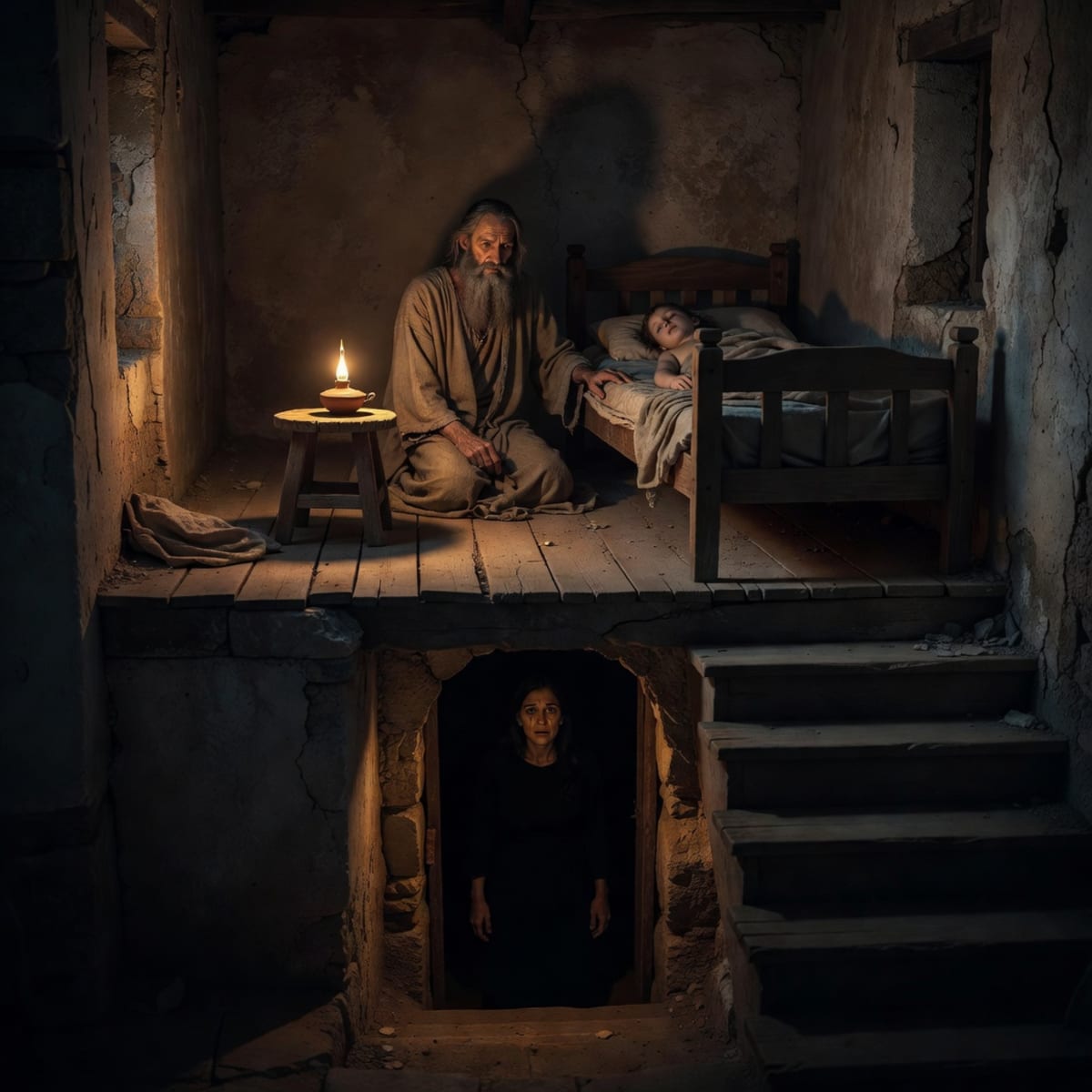
Some time later the woman’s son became sick. He grew worse and worse, and finally he died. Then she said to Elijah, “O man of God, what have you done to me? Have you come here to point out my sins and kill my son?” But Elijah replied, “Give me your son.” And he took the child’s body from her arms, carried him up the stairs to the room where he was staying, and laid the body on his bed. Then Elijah cried out to the Lord, “O Lord my God, why have you brought tragedy to this widow who has opened her home to me, causing her son to die?” And he stretched himself out over the child three times and cried out to the Lord, “O Lord my God, please let this child’s life return to him.” The Lord heard Elijah’s prayer, and the life of the child returned, and he revived! Then Elijah brought him down from the upper room and gave him to his mother. “Look!” he said. “Your son is alive!” Then the woman told Elijah, “Now I know for sure that you are a man of God, and that the Lord truly speaks through you.” (1 Kings 17:17-24, NLT)
Let that sit. The drought is still on. Baal still owns the official story of rain in Sidon. This Gentile widow has already watched a Hebrew prophet eat from her last handful, and she has watched the jars refill. Now her son is gone, and she does what grief does: she reaches for a cause. She names Elijah. She names her sin. She names God as the one who came close enough to kill. This is not a tidy faith moment. It is a mother accusing the guest who was supposed to be a gift.
Elijah does not protect his image. He does not remind her about the flour. He does not offer a sentence about God’s timing. He says four words: “Give me your son.” He takes the body from her arms. He carries it to the room God assigned him. He cries out to the Lord with a question that would fail a branding workshop. He does not polish the prayer. He tells God the truth about a widow who opened her house and a boy who is no longer breathing. Then he stretches himself over the child and asks for the boy’s life back. The Lord hears. The boy lives. The widow’s last word is not a leadership technique. It is recognition that the Lord truly speaks through him.
I will not turn the stretching or the three cries into a protocol. This is narrative. God restored a child’s life in a Sidonian upper room under a word Elijah did not invent. You and I are not authorized to promise a resurrection we have not been given. The miracle belongs to the Lord. What the passage shows, without turning description into a command, is the shape of a leader who stays. Elijah does not leave the house. He does not hide behind the previous miracle. He does not correct the widow’s theology before he carries her grief. He takes the crisis upstairs and tells God the truth about it.
Here is the principle. Faithful leadership does not disappear when yesterday’s success is followed by today’s pain. Presence is not a slogan you send from the next meeting. It is remaining in the room, receiving the accusation without defending the brand, and carrying what you cannot fix before God. Paul later names the same posture without a dead child in the scene: “Be happy with those who are happy, and weep with those who weep.” (Romans 12:15, NLT) Weeping with those who weep is not a softer leadership style. It is refusing to skip the human cost because the dashboard still looks like a win.
The failure mode is familiar. A vice president spends six months pulling a division through a turnaround. The quarter closes. The board sends a note. Then the operations manager’s teenage son lands in the ICU on a Tuesday night. The VP’s calendar is already stacked with victory-lap reviews. The cheap move is a text, a gift basket, and a sentence that sounds like care while protecting the win: “Let me know if you need anything.” “Everything happens for a reason.” “We’ll cover you. Stay strong.” James would not call that listening. “Understand this, my dear brothers and sisters: You must all be quick to listen, slow to speak, and slow to get angry.” (James 1:19, NLT) Slow to speak is hard when your reflex is to manage the moment so it does not stain the story you finished telling upstairs.
I have watched leaders vanish in that gap. The win made them visible. The crisis made them busy. They told themselves the team needed their composure more than their presence, which is often a polite way of saying they needed the room not to see them without an answer. The widow did not need Elijah to be impressive. She needed him to take the boy. God is the one who comforts. Paul writes, “All praise to God, the Father of our Lord Jesus Christ. God is our merciful Father and the source of all comfort. He comforts us in all our troubles so that we can comfort others. When they are troubled, we will be able to give them the same comfort God has given us.” (2 Corinthians 1:3-4, NLT) Comfort is received before it is given. You cannot outsource it to a slogan and call that comfort. If you follow Christ, the first move in someone else’s pain is not a verse you have not prayed. If you are still exploring faith, the first move is still honest: stay, listen, and do not pretend you can reverse what you cannot reverse.
Bring this to Tuesday afternoon. Name the crisis that arrived after a win. A person. A failure. A diagnosis. A resignation that followed the celebration. Write the sentence you have been using to keep it at arm’s length. Then write the act of presence that would cost you something on the calendar. Cancel the victory-lap meeting. Sit in the waiting room without filling the silence. Take the accusation without correcting it in the hallway. Carry the name upstairs, which is to say, tell God the truth about a person you cannot fix. Presence is not a guarantee that the boy lives. Elijah’s prayer was heard because the Lord heard it, not because presence is a technique that forces outcomes. The work in front of you is narrower and heavier than a miracle you have not been promised. Stay in the house.
This will not look like leadership to people who only measure movement. Staying looks like lost time. Carrying grief upstairs looks like a leader who should have already moved on. The jars in this house were a daily mercy. They were not a shield against the next sorrow. Tomorrow the story widens. Obadiah serves God inside Ahab’s corrupt court and hides a hundred prophets where nobody is watching. Visible confrontation is not the only faithfulness God uses. The month still builds toward Stand and Rebuild, the paid field guide at the end of September. Today’s piece of that work is simpler than Carmel and costlier than a well-timed quote. When the crisis follows the provision, do not protect the win. Stay.
Leadership Challenge: Who is in a crisis that arrived after a win you wanted to protect? What sentence have you been using to keep it at arm’s length? What is one concrete act of presence this week that does not require you to fix what you cannot fix?
I write about leadership at the intersection of timeless principles and modern workplaces. Follow for weekly insights on building teams that actually work. For more articles like this consider subscribing to my Substack at: https://christianleadership.now