“For God has not given us a spirit of fear and timidity, but of power, love, and self-discipline” (2 Timothy 1:7, NLT).
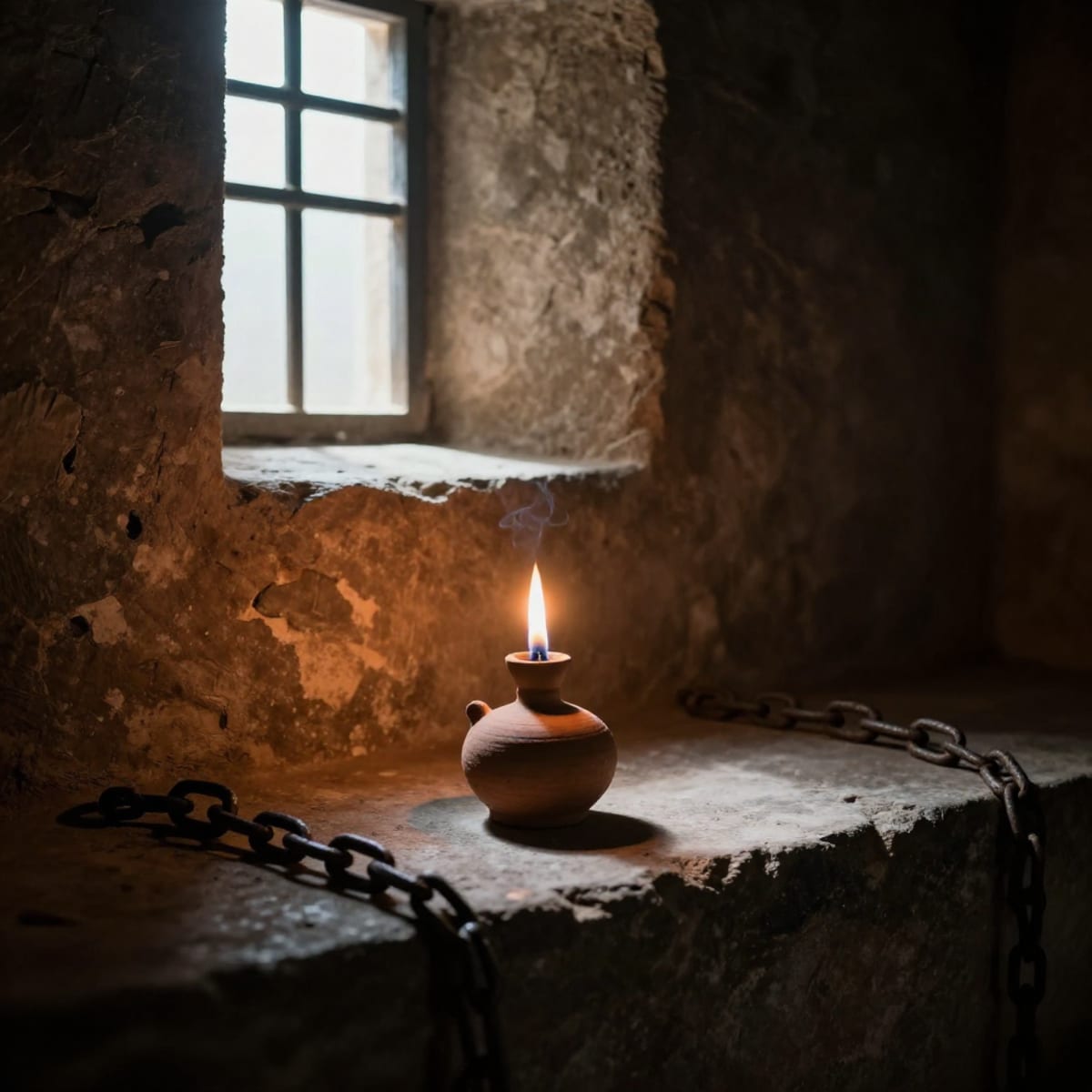
A dying man in a Roman cell is telling a younger leader that the spirit running his week is not the one God gave him.
Paul has already named Timothy’s tears. He has already named Lois and Eunice. He has already put his own hands back on the gift and told the young man to put air on the coals. Yesterday we sat with that charge. Today he stays inside the same sentence and names the thing that starves the fire. Fear. Timidity. The spirit that makes a gifted person look careful while the work goes quiet.
This is the last letter. Paul is not diagnosing a mood. He is naming an operating system. Timothy is in Ephesus with false teachers, a young face, and a mentor whose imprisonment has become a rumor people can use against him. The safest version of Timothy would keep his head down, keep the gift on a low flame, and wait for a cleaner season. Paul will not bless that version. The spirit God gave is not timid.
This month we are walking through Paul’s final letters to Timothy, the closest thing the Bible has to a leadership mentorship manual passed from a veteran to his protégé. Phase 4 is suffering and endurance. The tone has shifted from instruction to intensity. A man who is almost out of time will not let his son confuse caution with faithfulness.
Let the verse stand for a moment. God has not given us a spirit of fear and timidity. The sentence is first a negation. Before Paul names what you were given, he names what you were not given. That order matters. Most of us try to add courage on top of a fearful operating system. We keep the fear and decorate it with better language. Diligence. Timing. Alignment. Risk management. Paul does not decorate it. He evicts it. Then he names the replacement: power, love, and self-discipline. Three gifts, not one slogan.
I have watched a director sit on a decision for six weeks with the data already in the room. She kept asking for one more model. The team called it thorough. It was fear that had learned to speak the language of analysis. I have also watched the opposite failure, the leader who moves fast because stillness would force him to feel the cost. That is not power. That is panic in a better suit. Fear does not always freeze you. Sometimes it makes you look decisive while you are only trying to get out of the feeling.
The principle is simple enough to carry into a Tuesday meeting and hard enough to keep. You cannot fan a gift while you are leading from a spirit God never gave you. Fear and timidity produce a version of leadership that looks responsible and is actually a slow resignation. The Spirit God gave is power to act, love that keeps the action from becoming domination, and self-discipline that keeps both from becoming a mood. Those three together are how a leader stays in the work when the work costs.
Take the director again. Power would have put the decision on the table in week two, when the facts were already sufficient. Love would have remembered the people waiting in the dark while she refined a model nobody needed. Self-discipline would have kept her from turning anxiety into another meeting. She did not lack intelligence. She lacked the spirit the verse names. Whether you are a believer or still exploring, you already know this pattern. The room does not need a braver personality. It needs a leader who will stop serving fear under a professional name.
Paul is not inventing this language in a cell. He has said it before. “So you have not received a spirit that makes you fearful slaves. Instead, you received God’s Spirit when he adopted you as his own children. Now we call him, ‘Abba, Father’” (Romans 8:15, NLT). The parallel matters. The spirit of fear is a slavery spirit. It makes you manage the room the way a slave manages a master: constantly reading the face, constantly adjusting, never free enough to tell the truth. The Spirit God gave is an adoption spirit. You are not performing for a verdict. You are working from a name that was already spoken over you. The integrated believer hears this as the Holy Spirit, not a personality upgrade. The reader still exploring can take the same claim without a sermon. You already know what it is like to lead as if every room is a verdict. That is a miserable way to spend a career. Paul is offering a different source.
I need to be honest about what this verse is not saying. It is not saying faithful people never feel afraid. Timothy felt something real enough that Paul had to write the sentence. Paul himself asked churches to pray for his boldness. Feeling fear is not the failure. Making fear the spirit of the house is the failure. The verse is also not a promise that courage produces a clean quarter. Paul is in chains while he writes it. Power, love, and self-discipline did not get him a lighter sentence. They kept him from becoming a smaller man inside the sentence he already had.
I have used prayer as a stall. Not the honest kind that asks for wisdom and then obeys. The kind that keeps the decision in committee with God so I do not have to take the heat yet. Christian leaders are fluent in that move. We call it waiting on the Lord when we are waiting on our nerve. The spiritually curious version is easier to spot and no cleaner: one more alignment meeting, one more stakeholder pass, one more week for the timing to improve. Same spirit. Different vocabulary.
The workplace mechanism is older than a modern org chart. “Fearing people is a dangerous trap, but trusting the Lord means safety” (Proverbs 29:25, NLT). That is wisdom literature, the kind of sentence that describes how life usually works, not a contract that your job will be protected. The trap is specific. When you fear people, you start making decisions designed to keep you unaccused. You delay the conversation. You soften the standard. You distance yourself from the colleague whose reputation took a hit. You call it politics. It is a trap. Trusting God is not naivete about power. It is refusing to let other people’s faces become the spirit that runs your week.
Bring it to Tuesday afternoon. First, name the fear by its real name, not its professional alias. Write the decision you have been circling. Then write the sentence you have been using to explain the delay. Diligence. Timing. Alignment. Not enough data. Now write the fear underneath it in one plain clause. I might lose the room. I might look like I picked the wrong person. I might suffer with someone whose name is already damaged. If you cannot name the fear, you will keep serving it under a better title.
Second, ask which of the three gifts is missing. Power is the capacity to act when action will cost you something. Love is the reason you act for the person and the mission, not for your own protection. Self-discipline is the refusal to let the day’s mood, or the week’s panic, become the strategy. Most fear-based weeks are missing one of the three. Some leaders have power and no love, so the room gets force. Some have love and no power, so the room gets sympathy and no decision. Some have both for an afternoon and no self-discipline by Thursday, so the good impulse dies in the inbox. Diagnose the missing piece. Do not ask for a feeling of bravery. Ask which gift you refused to use.
Third, make one move this week that the fear would never schedule. Have the conversation. Keep the association. Hold the standard. Fan the gift out loud in the room that has learned you will not. Yesterday the work was putting air on a coal. Today the work is refusing the spirit that keeps the bellows on the shelf. Tell one trusted person what you named. Fear loves privacy. Power, love, and self-discipline can survive daylight.
I will not pretend this is tidy. Leading from the spirit God gave you can still lose you the deal, the alliance, the easy week. Paul knew that. He is about to tell Timothy not to be ashamed of a prisoner. The cost is already on the table. The other path has a cost too, and it compounds. You keep the room. You lose the fire. You become the careful operator people trust with the dashboard and no longer trust with the truth. The team learns that fear is the real strategy. They start leading the same way.
The Field Manual at the end of this month will put this under the Leader’s Suffering: the spirit of power, the chain that cannot hold the word, the four-generation work of handing the gift to someone who will hand it on. February’s Protocol and March’s Fortress are downstream of this sentence. You arrest the fear before it becomes the plan. You build an inner life that can hold power without cruelty. The source is older than those frameworks. A mentor in chains told a frightened protégé that God had already given him something better than the spirit that was running the week.
Tomorrow Paul turns the same courage toward shame and suffering. “So never be ashamed to tell others about our Lord. And don’t be ashamed of me, either, even though I’m in prison for him. With the strength God gives you, be ready to suffer with me for the sake of the Good News” (2 Timothy 1:8, NLT). Fear is not only what keeps you from acting. It is what makes you step back from the person whose faithfulness became expensive. The young leader in Ephesus did not need a personality transplant. He needed to stop leading from a spirit God never gave him, and to spend the three gifts he already had: power, love, and self-discipline.
Leadership Challenge: Which professional alias have you given your fear this month? Name the missing gift (power, love, or self-discipline), then schedule the one move this week that fear would never put on the calendar.
I write about leadership at the intersection of timeless principles and modern workplaces. Follow for weekly insights on building teams that actually work. For more articles like this consider subscribing to my Substack at: https://christianleadership.now