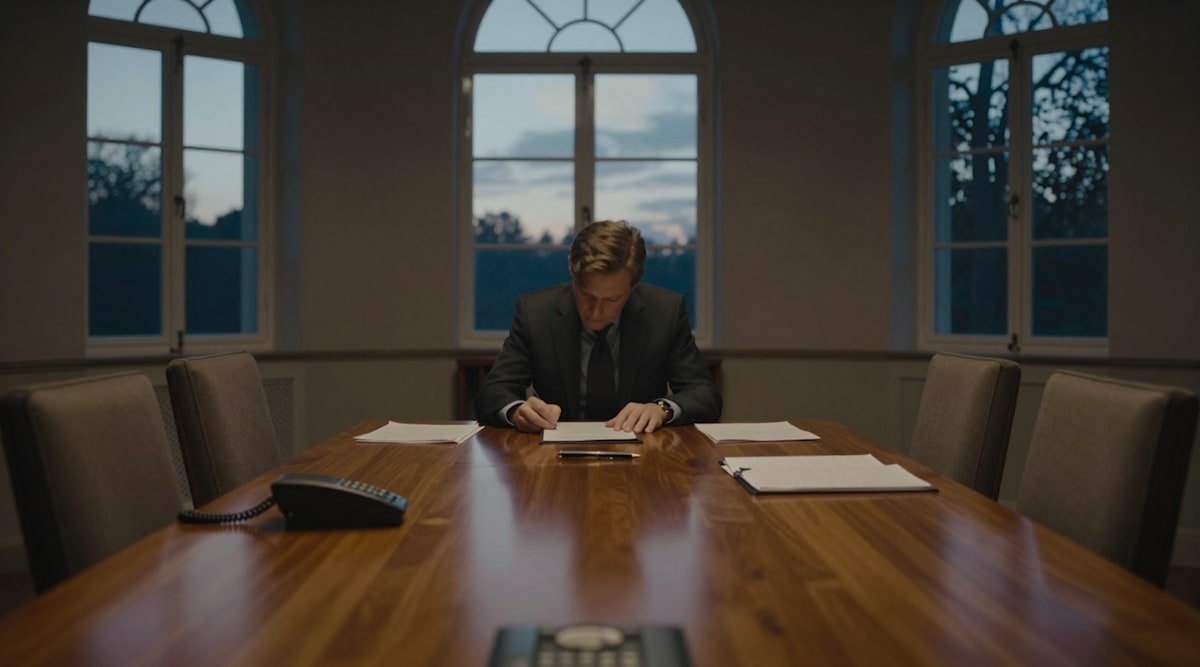
At 11:47 on a Thursday night, a founder signed the offer letter and emailed it to the candidate before he closed his laptop. The board would learn about the hire on Monday. His COO would learn at the all-hands on Tuesday. His wife learned the next morning when she asked what time he had finally come to bed. He had been thinking about the candidate for six weeks. He had a clear read. The decision felt right. He hit send.
Three months later he was sitting across from that same hire explaining why the role was not working, and the question running behind his eyes was not whether he had made the wrong call. The question was why he had not run it past a single person who had earned the right to push back.
That is the anti-pattern. Welcome to Deciding Alone on High-Stakes Issues, the failure mode where a leader collapses the Three Witnesses down to one and calls his own read decisiveness.
Yesterday we named the Ventriloquist God, the leader who weaponizes Scripture to enforce his already-chosen position. Today we name the failure that quietly makes the Ventriloquist God possible. A ventriloquist cannot perform if the theater is full of honest people. Yesterday's anti-pattern needs an empty room to work. Today's anti-pattern is what creates the empty room.
The image of this failure is the chief executive who can write the email, sign the offer, terminate the contract, fire the staff member, take out the second mortgage, file the lawsuit, or send the resignation, all in the same forty-eight hours, and never once say the situation out loud to another adult. He is not hiding from accountability. He thinks he is exercising it. He has confused the responsibility to decide with the obligation to decide privately. The two are not the same thing.
Scripture is direct on this point in a way that should make every leader uncomfortable. "Without wise leadership, a nation falls; there is safety in having many advisers" (Proverbs 11:14, NLT). The Hebrew word translated "advisers" carries the weight of formal counsel, the elders at the gate, the men whose job it was to weigh consequences before the king moved. Solomon repeats the principle four chapters later. "Plans go wrong for lack of advice; many advisers bring success" (Proverbs 15:22, NLT). The pattern of the wisdom literature is not "ask for input when you are uncertain." The pattern is that decisions made alone tend to fall apart, and decisions weighed by many counselors tend to hold. The leader who only ever asks for input when he feels stuck is not running counsel. He is running confirmation when he is desperate, and silence the rest of the time.
The clearest illustration of this anti-pattern in the Old Testament is Joshua and the Gibeonites. Israel was on a winning streak. God had given them Jericho and Ai. Then the Gibeonites showed up in moldy bread and ragged sandals and told a story about coming from a far country. The decision in front of Joshua was a peace treaty with what he believed was a distant nation. The verse that should rearrange most leaders' decision-making sits in Joshua 9:14: "So the Israelites examined their food, but they did not consult the LORD" (NLT). They had everything they needed to recognize the deception. They did not need a miracle. They needed to stop the clock long enough to check the read with the One who actually had the data they were missing. Joshua skipped Counsel. The treaty bound Israel for generations. The Gibeonites lived across the valley.
The diagnosis underneath this anti-pattern is harder to look at than most leaders expect, because it is usually not laziness. It is competence. The leader running this failure mode has earned his read. He has been right before. He has built a track record of strong calls made fast. The very pattern that got him here is now the pattern that will quietly destroy what he built. The flesh under the surface is not arrogance, at least not the loud kind. The flesh is self-sufficiency, the most spiritualized form of unbelief, the same one we named earlier this month inside the AUDIT failures. ALIGN simply reveals where that self-sufficiency exits the heart and enters the room. The leader who never asked God for counsel is the same leader who will not ask his elders, his board, his spouse, or his wisest peer. The empty audit becomes an empty alignment. The voice in his own head becomes the only witness he calls.
There is a tell for this anti-pattern, and any leader can run it on himself in five honest minutes. Write down the last three high-stakes decisions you made. Hires, fires, financial commitments above some threshold, public statements, major direction changes. Next to each one, name the person you talked to before the decision was final. Not the person you informed. The person who had the freedom and the standing to say no. If two of the three lines are blank, you are not running ALIGN. You are running yourself, which is the entire failure mode dressed up in a leadership title.
The cruelty of this anti-pattern is hidden until the decision goes wrong, because while it is working the leader looks decisive and the team looks underutilized. The team notices long before he does. They watch him sign things they have information about, terminate relationships they had context on, hire people they had concerns about, and the message they receive over time is not that he is bold. The message is that their voice does not matter. The most loyal of them stop offering input. The least loyal of them start collecting evidence. The day the call finally goes badly, the leader walks into the room with a problem, and the room is full of people who could have stopped him weeks ago and have already given up trying. The cost is not just the decision. The cost is the team's belief that their counsel will ever be heard.
The proper pattern, ALIGN running clean, looks different at the procedural level and not just the spiritual one. Chapter 9 of Book 2 frames ALIGN as the third step of the Watchman's Protocol, the calibration of an audited impulse against Truth. Truth comes through Three Witnesses: Scripture, Counsel, Conscience. The two outer witnesses are the ones most leaders run honestly. They will read the Bible. They will check their conscience. The middle witness is the one they skip. Counsel is the witness that requires a phone call, a coffee, a vulnerability the other two do not. Scripture cannot ask follow-up questions. Conscience cannot push back on the timeline. Counsel can do both. That is exactly why it is the witness that gets quietly removed from the room. The leader who skips Counsel is not running ALIGN. He is running ALIGN minus thirty-three percent and telling himself the witnesses agreed.
Standing Order #7 in Chapter 17 of Book 2 is one line. I will not decide alone on high-stakes issues. The order is pre-decision. It is set when the leader is thinking clearly, before the next big call shows up wearing urgency. The Standing Order is not "I will gather counsel if I feel uncertain." The order is that the decision is not eligible to be made if it has not been weighed by another adult who is not on the leader's payroll for being agreeable. The Standing Order does not require the leader to do what the counsel says. The Standing Order requires the leader to hear it before the decision is final. The two are not the same thing, and the leader who collapses them has already drifted.
The recovery is not complicated, which is part of why most leaders never run it. Three moves, in this order. First, define what "high-stakes" means for your seat before the next high-stakes decision shows up. Money above a number. Personnel decisions above a level. Public statements above a platform size. Anything that touches your spouse or family in a material way. Write it down. The list is your gate. The list will tell you what cannot be decided alone. Second, name three people, not one, who are pre-authorized to be your counsel on those gates. One who knows your work. One who knows your character. One who knows your blind spot. Tell them this is the seat you are asking them to sit in. Permission must be granted before the decision lands. Witnesses who do not know they are witnesses cannot do their job. Third, the next time you find yourself ready to sign or send something that hits the high-stakes list, stop, close the laptop, and call one of the three. Not to inform them. To be weighed by them. If you cannot face that phone call, the call is the audit. The reason you do not want to make it is the reason you need to make it.
Tomorrow we name the third anti-pattern in the ALIGN family, the Echo Chamber Jury, the failure mode of the leader who does seek counsel and then assembles a jury that only ever agrees with him. Today's anti-pattern is the empty room. Tomorrow's is the rigged one. Naming them together is how the Counsel witness comes back online, and how the ALIGN step starts to weigh what it is supposed to weigh.
Leadership Challenge: Write down the last three high-stakes decisions you made. Next to each, name the person who had standing to tell you no before it was final. How many lines are blank, and what does that number tell you about the way your Counsel witness is being kept out of the room?