Every leader under attack faces the same temptation, and it splits two ways. One leader drops the work to fight the critics, calls the emergency meeting, and spends the next month answering every rumor. Another pretends the threat is not real, keeps building, and hopes the noise passes. Both lose. The first abandons the mission to fight about the mission. The second gets overrun while pretending the enemy went home.
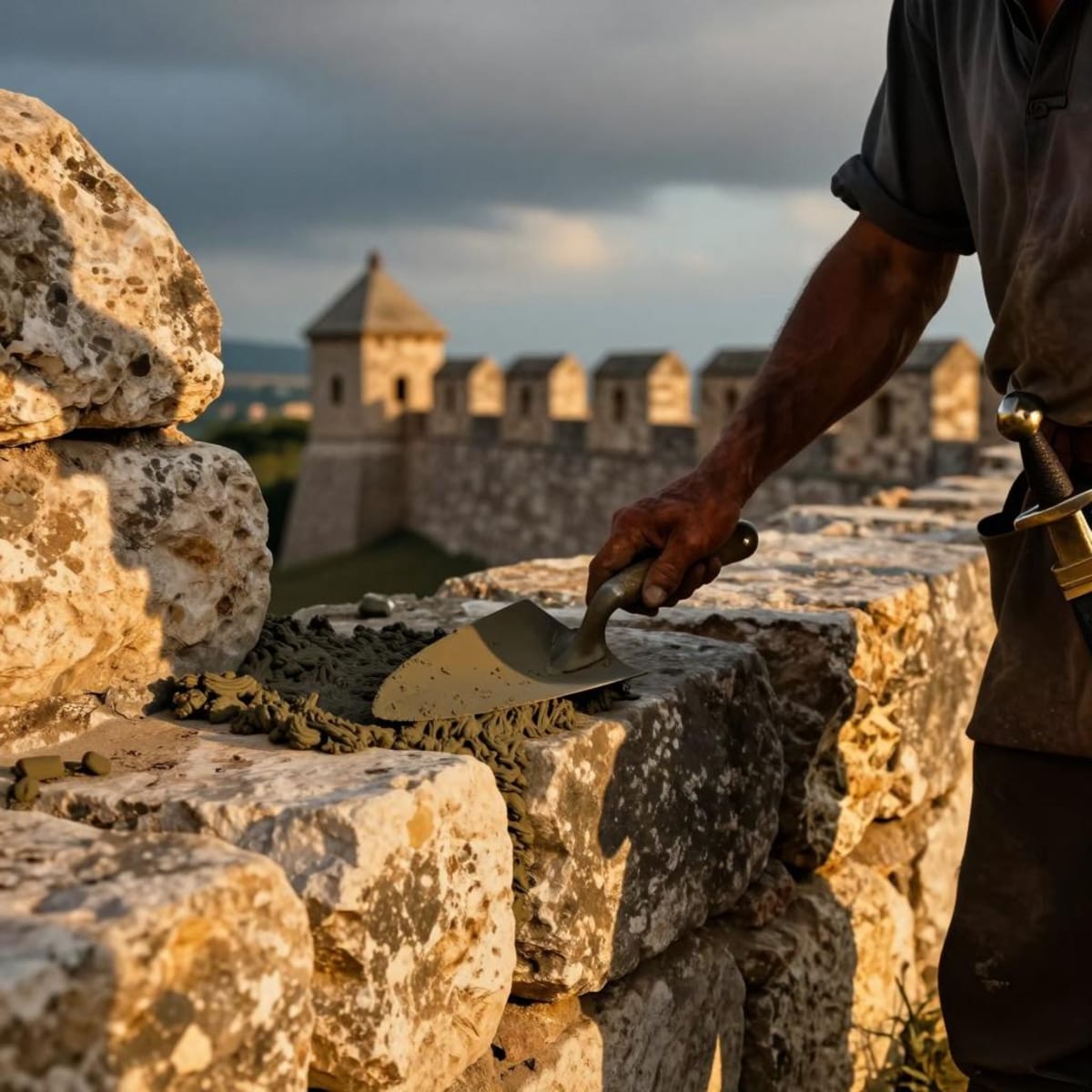
Nehemiah found a third way, and he built it into the hands of every worker on the wall. Each laborer held a tool in one hand and a weapon in the other. The work continued. The guard never dropped. He called it neither retreat nor war. He called it the way you finish something worth finishing when people want it to fail.
By the middle of Nehemiah 4, Jerusalem’s wall stood at half its height, and that progress is exactly what provoked the crisis. Here is how Nehemiah describes the response he organized:
“Then as I looked over the situation, I called together the nobles and the rest of the people and said to them, ‘Don’t be afraid of the enemy! Remember the Lord, who is great and glorious, and fight for your brothers, your sons, your daughters, your wives, and your homes!’ When our enemies heard that we knew of their plans and that God had frustrated them, we all returned to our work on the wall. But from then on, only half my men worked while the other half stood guard with spears, shields, bows, and coats of mail. The leaders stationed themselves behind the people of Judah who were building the wall. The laborers carried on their work with one hand supporting their load and one hand holding a weapon. All the builders had a sword belted to their side. The trumpeter stayed with me to sound the alarm.” (Nehemiah 4:14-18, NLT)
The threat was not imaginary. Sanballat, Tobiah, and their allies had watched the gaps in the wall close, and they plotted a coordinated attack on the workers. The people were exhausted. The rubble was heavy, the enemy was loud, and fear moved through the camp faster than any spear. Nehemiah had two problems at once. He had a wall to finish and an attack to survive, and he could not solve one by ignoring the other.
His first move had already set the pattern. When the threats began, Nehemiah wrote, “But we prayed to our God and guarded the city day and night to protect ourselves” (Nehemiah 4:9, NLT). Notice the shape of that sentence. Prayer and a posted guard, in the same breath, with no sense that one made the other unnecessary. He did not pray instead of guarding. He did not guard instead of praying. He did both, because he believed God would protect the city and he still put watchmen on the wall.
This is the discipline the passage teaches, and it is easy to name and hard to hold: integrated vigilance. Protect the mission without abandoning the mission. The trowel stays in one hand. The sword hangs at the side. Neither one replaces the other, and neither one gets dropped when the pressure rises.
Two failure modes wait on either side of this discipline. The first is the leader who becomes all sword. Every criticism gets a response. Every rumor gets a meeting. Every threat becomes the new priority until the opposition, not the assignment, is running the calendar. That leader feels busy and even brave, but the wall stops rising. The enemy does not have to defeat a mission he can persuade you to abandon. Permanent combativeness is not vigilance. It is a slow surrender disguised as a fight.
The second failure mode is the leader who becomes all trowel. This leader hears the threat and decides that acknowledging it would look weak or faithless. The head goes down, the work continues, and the guard never gets posted. Denial wears the costume of focus. Then the attack lands on an undefended wall, and the people who trusted the leader pay for the pretending.
Nehemiah held both hands open. He told the people the truth about the danger, then anchored them in something larger than the danger. “Don’t be afraid of the enemy,” he said. “Remember the Lord, who is great and glorious.” He named the threat and named God in the same speech. Only after that did he reorganize the work, stationing half the people as guards while the other half kept building. Fear got honest treatment, not denial and not panic.
That reorganization cost him something real, and the text does not hide it. Only half his men worked the wall from that day forward. Integrated vigilance is slower than full production. A team that has to watch the horizon builds less than a team that can give everything to the task. Nehemiah accepted a slower wall because a finished wall built by a slaughtered crew was no victory at all. Leaders who refuse to pay the cost of protection usually pay a higher one later.
Underneath the practical arrangement sat a conviction the whole month has been building. Solomon put it plainly in the wisdom of the Psalms: “Unless the Lord builds a house, the work of the builders is wasted. Unless the Lord protects a city, guarding it with sentries will do no good” (Psalm 127:1, NLT). That verse names both halves of Nehemiah’s day, the building and the guarding, and places God underneath each one. This is wisdom literature, a general truth about how life works rather than a promise that removes human effort. Nehemiah still built. He still posted the guard. He simply refused to believe the outcome rested on his tools and his weapons alone.
Bring this into a normal week. Every leader eventually runs a project under threat. A competitor targets your best account. A reorganization threatens the team you have built. A campaign of criticism, sometimes fair and sometimes not, starts to circle the work you are trying to finish. The two ancient temptations show up on schedule. You can turn every day into a war room, answering critics until the actual work stalls. You can also decide the threat is beneath your attention and keep shipping until it blindsides you.
Integrated vigilance asks for both hands. Name the threat honestly, first to God and then to the people who are counting on you, the way Nehemiah did before he changed a single work assignment. Then post a real guard. The guard might be a documented decision trail, a communication plan, a trusted ally who watches the flank while you keep your hands on the work. Put it in place, and then return to building. Do not let the opposition set your agenda. A guard that runs in the background protects the mission. A guard that becomes the mission has already handed the enemy the win.
Yesterday’s article watched Nehemiah hand every family a section of the wall, turning one leader’s burden into a whole people’s work. Today that shared work comes under fire, and the same leader shows how to defend it without deserting it. Tomorrow the story turns to a harder threat. The gravest danger to the wall was not the army outside. It was the injustice inside, where the people building the wall together were exploiting one another. A leader can guard the perimeter perfectly and still lose the city to what is happening within it.
Here is the concrete move for this week. Find the one threat you are handling badly, and diagnose which hand is failing. If you are all sword, spending your energy fighting the opposition while the work stalls, sheathe it, post a reasonable guard, and get back to the wall. If you are all trowel, pretending the threat will pass while your team waits for someone to name it, pick up the sword and post the guard you have been avoiding. In either case, do the thing Nehemiah did before he did anything else. Remember the Lord, who is great and glorious, and get back to work.
Leadership Challenge: Think of the one threat you are currently handling badly. Are you all sword, letting the fight against it consume the work you were supposed to protect, or all trowel, pretending it will pass while your team waits for you to name it? What is the one guard you need to post this week so you can get both hands back on the wall?
I write about leadership at the intersection of timeless principles and modern workplaces. Follow for weekly insights on building teams that actually work. For more articles like this consider subscribing to my Substack at: https://christianleadership.now