The strongest man on the floor of the gym is benching three-fifteen for reps. He is forty-two, lean through the chest, gray at the temples, the kind of build other men glance at and adjust their own posture around. He racks the bar, stands up, walks to the dumbbell rack, and his phone buzzes. He looks at the screen. A short text from his teenage son. The text is two words long. The two words land somewhere behind his sternum like a thrown stone. He feels the heat climb from the chest into the neck. He thumbs back a reply before the breath he is holding finishes leaving his body. The reply is one sentence. The sentence is the kind of sentence a father sends when he is angry and is not aware he is angry. He hits send. He puts the phone in the chalk bowl on the rack. He walks back to the bench. He does another set. The bar moves. The chest holds. The strength on the bar is real. The strength inside the man is gone. He just lost a war his son did not know they were fighting and he is forty-eight seconds away from finding out.
This is the lie at the center of cultural masculinity. The lie says strength is the bar. The lie says the man with the bigger numbers, the longer hours, the harder no, the faster yes, the louder voice in the room is the strong one. The lie has a long pedigree. Locker rooms taught it. First jobs reinforced it. Promotions rewarded it. Every movie a boy watched between the ages of nine and fifteen confirmed it. By the time he is forty, the lie is not a lie he believes; it is a lie he is. The lie has a name in this newsletter. The lie is the equation of capacity with strength. The man can lift more, work more, drink more, push more, swing more, send more, and so he is more. The bar moves, so the man is intact. The hill gets taken, so the man is honored. The lie has a shelf life. The lie holds together for about three decades. Then a son sends a two-word text and the structure the lie was holding up collapses in forty-eight seconds, and the man finds out, late, that the capacity he was building was not strength at all. It was the load on the bar. There is a difference.
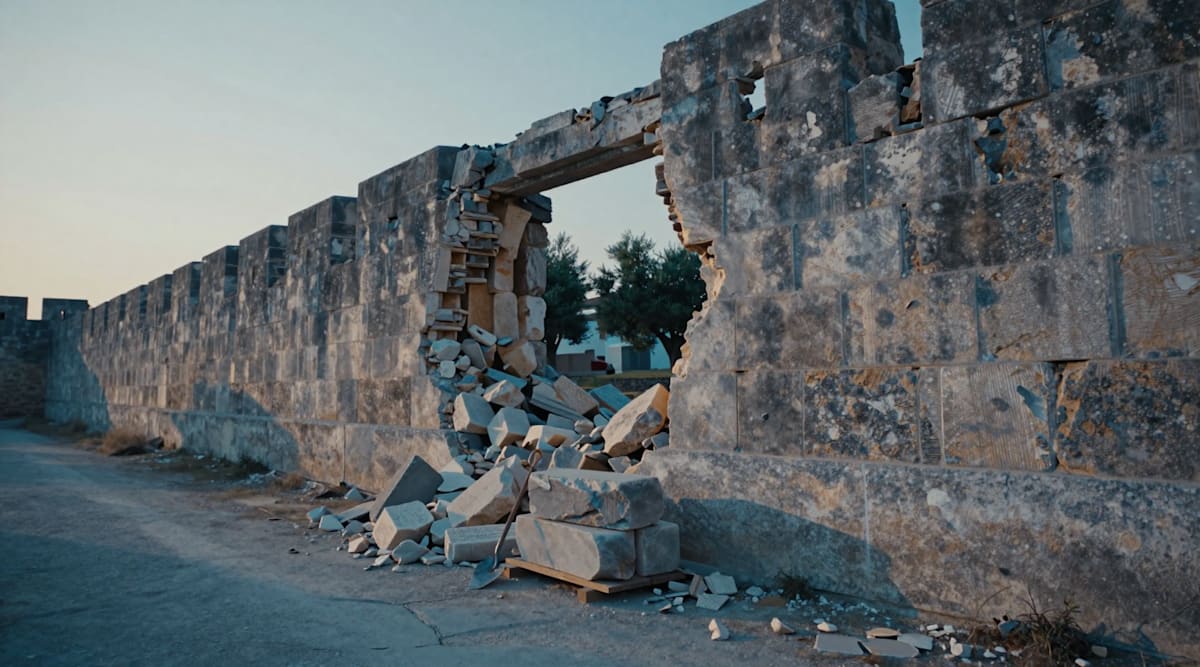
Solomon writes the truth of it in a single sentence. He has spent twenty-five chapters laying out wisdom, the texture of the wise life, the way it actually works on the ground. He sets one image down and walks away from it. He writes, "A person without self-control is like a city with broken-down walls" (Proverbs 25:28, NLT). Let the image sit. A walled city in the ancient near east was not a metaphor. It was a survival apparatus. The wall kept the raiders out. The wall held the line between the family inside and the threats outside. The city without walls was not weakened. The city without walls was finished. Every animal, every army, every wandering threat could walk in unopposed. The wealth inside the city was not protected by the wealth inside the city. The wealth inside the city was protected by the wall around the city. Solomon does not say the ungoverned man is weaker. He says the ungoverned man is exposed, and so is everyone inside his walls. The man's strength is real. The wall is the problem. The wall is gone. The bench press at forty-two is the wealth inside the city. The two-word reply to his son is the raiding party that just walked through the open gate.
The diagnosis is sharper than most men want to hear it. The defaults are not weaknesses. The defaults are kinetic. The man who runs hot, fixes fast, charges hard, and pushes through is not deficient in strength. He has plenty of strength. He is deficient in walls. The same shoulders that hold the deadlift hold the resentment at home. The same lungs that finish the run finish the conversation his wife was still in the middle of. The same arms that close the deal close the door on the daughter who was almost ready to talk. The capacity is the load. The wall is the governor. The ungoverned man is a city in the open. The defaults walk in and out at will. His anger walks the streets. His pride walks the streets. His fear walks the streets dressed as competence. The neighbors, his wife, his sons, his daughters, the people he is supposed to be guarding, are inside the city watching the gates swing open every morning and praying that today is not the day the wrong thing wanders in. Most men do not realize they are this kind of city. The man with the bench press cannot imagine he is the unprotected one. The wall is invisible until it is gone. By the time he notices the wall is gone, the damage inside the city is years deep.
The Protocol is the masonry. ARREST, AUDIT, ALIGN, ACT are not four steps of a program. They are the four sides of the wall the man rebuilds at every gate. ARREST is the halt at the gate the moment the reflex moves. The hand reaches for the phone; the halt is the half-second the hand does not. AUDIT is the question asked in the silence after the halt. What am I actually feeling. Is it hunger, fatigue, fear, hurt. What did that text actually say, and what did I read into it. Why is my reply already written before my breath finished leaving my body. ALIGN is the calibration to the Three Witnesses, the Scripture the man has hidden in his chest, the brother who has permission to contradict him, the conscience the Spirit has not let go quiet. ACT is the move obedience requires once the alignment is done. Sometimes ACT is sending a different sentence. Sometimes ACT is sending no sentence. Sometimes ACT is calling his son before the day ends and saying the words the first reply did not say. Solomon already wrote the principle the Protocol enforces. He writes, "Better to be patient than powerful; better to have self-control than to conquer a city" (Proverbs 16:32, NLT). The man on the bench is conquering the bar. He has not yet conquered himself. Solomon ranks the second higher than the first. Most cultures, including ours, have it reversed. Paul carries the same theology into the new covenant when he writes that the renewed life captures "their rebellious thoughts and teach[es] them to obey Christ" (2 Corinthians 10:5, NLT). The thought is captured at the gate. The wall holds because the man stops at the wall.
The recovery starts with a question, asked honestly, in the next quiet moment the man can find this week. Where is the wall in my life broken down right now. Not in general. In specific. Is it the wall around the tongue, the wall around the eyes, the wall around the calendar, the wall around the drink at 9 PM, the wall around the phone after 10. Pick the one breach that is currently doing the most damage. Stand on it long enough to name it out loud, even if the only person who hears the words is you in the cab of the truck. Then this week, on the next instance of the reflex that runs through that breach, run a single step of the Protocol. Not all four. Just ARREST. Halt the reflex one time. One halt. One delayed sentence. One unsent text. One walked-away from the kitchen counter before the clipped line landed. The masonry of a wall is one stone at a time. The city is not rebuilt in a weekend. The city is rebuilt in the half-seconds the man stops to lay one stone instead of letting the next raid run through. Tomorrow we turn the corner from the city image to the cultural lie underneath it. The world calls ungoverned strength manhood. Scripture calls it a city in the open. The next twenty-eight days walk the wall around twelve specific gates. The wall is the work of the month. The Watchman starts on the wall today.
Leadership Challenge: Stand still for sixty seconds and answer this honestly. Where is the wall around your life broken down right now? Not the wall in general, the specific breach that is currently letting the most damage in and out. Is it the wall around your tongue at 6:47 AM with your wife. The wall around your eyes when the phone unlocks at 10:15 PM. The wall around your calendar that lets work walk into Saturday morning without asking. The wall around the bottle on Wednesday night. The wall around the reply you send your teenage son before your breath finishes leaving your body. Name the single breach that is doing the most active damage right now. Write it on the back of the index card from yesterday in one short phrase. "The reply I send before I breathe." "The third drink." "The Saturday email." This week, on the next instance of the reflex that runs through that breach, run one step of the Protocol. Just ARREST. Halt the reflex once. Which breach are you naming, and what is the first halt going to look like when the reflex moves and the wall is finally there to stop it?